This summer has been by far one of the busiest summers I've ever experienced. Between a new job with a boss that recently left, MFA course work deadlines, family visits and contracts to complete, finding time to do everything kept me up many a night.
But that is life in general. Who's life isn't busy? Writers though, have to make time for reading and writing on top of our daily routines.
I don't have a lot of advice unfortunately on time management.
I recently submitted my first MFA packet and paid work deliverables for August. I thought I had some room to breath but September is proving to be much of the same.
In terms of writing, I have four weeks to deliver my next packet (which consists of two critical essays, thirty pages of creative material and a cover letter).
So what have I learned?
I've learned that even with everything going on in your life, you have to make time to read and write.
WRITE AND READ WHENEVER YOU GET A CHANCE!
Whether it's for half an hour or a four hour stint. You need to insert that "to do" in there always.
Some people are lucky and have the luxury of reading and writing for a certain amount of time a day, but for those of us who don't, it important to remain consistent in our inconsistency. Look for those minutes and hours and keep plugging at it! You can do it!
Showing posts with label Jenn. Show all posts
Wednesday, August 30, 2017
Wednesday, July 12, 2017
To Novel or To Short Story?
As long as I can remember, my focus has been on writing the great novel. It started with young adult stories, then adult contemporary and psychological thrillers. Every time I came up with an idea, I was filled with the excitement of starting something new. The old stories left unfinished.
I've critiqued other writers who've written short stories and appreciated their efforts but never thought that it was something I wanted to pursue... until now.
If you're like me and haven't considered writing short stories, here are a few reasons why they might be worth diving into:
1) They are much shorter and thus take less time
I know - it's an obvious one.
2) You can experiment with writing craft
Have a style you're interested in or a craft element (i.e. metaphors, magical realism) you want to play with? A short story allows you to develop these skills without major investment.
3) Beginnings, middles and ends
Short stories allow you to practice completing a story and seeing it through the entire arc.
4) Opportunities to be published
Novels (usually) take a long time to complete and once complete, you must go through a significant length of time for submission. Because short stories take less time, you have greater opportunities to send them out to literary journals and have them potentially published, thus building your street cred as you continue to pursue your great novel.
5) Sometimes you just need a break
Sometimes, you might be too engrossed in that one great novel. Short stories allow you to stretch and exercise your mind. Think of things in different points of view and examine ideas and characters you might not have thought about.
Happy Writing!
Wednesday, May 3, 2017
Book Signings for Future Readers
I never got into book signings until later in life. As a child, it never occurred to me that this was a thing. Having been in the writing industry for a number of years, I now enjoy a good signing. It's a chance to meet authors face to face (if only briefly). Even in short time periods, you get a sense of an author's sincerity and authenticity.
Now that I'm a mom with a rambunctious almost-three-year-old, I've asked authors to sign books to the future him. It's been remarkable to see award winning writers write cool notes to the little guy. Hopefully these will inspire him one day.
Here are a few:
Animals Anonymous, Richard Michelson, award-winning poet
Mountains Beyond Mountains, Tracy Kidder, Pulitzer Prize Winner, Non-Fiction
The Sympathizer, Viet Thanh Nguyen, Pulitzer Prize Winner, Fiction
A Brief History of Seven Killings, Marlon James, Man Booker Prize Winner, Fiction


Now that I'm a mom with a rambunctious almost-three-year-old, I've asked authors to sign books to the future him. It's been remarkable to see award winning writers write cool notes to the little guy. Hopefully these will inspire him one day.
Here are a few:
Animals Anonymous, Richard Michelson, award-winning poet
Mountains Beyond Mountains, Tracy Kidder, Pulitzer Prize Winner, Non-Fiction
The Sympathizer, Viet Thanh Nguyen, Pulitzer Prize Winner, Fiction
A Brief History of Seven Killings, Marlon James, Man Booker Prize Winner, Fiction

Monday, April 17, 2017
Kickstart Your Writing
We've all been there. You're twenty five pages into writing your great novel and find yourself unable to move forward. You want to start a new project, but you've been staring at a blank page for hours, possibly days on end. So how do you get yourself out of a rut? Here are a few ideas to kickstart your writing again.
Whether your halfway through your epic novel or at the beginning piecing things together, sometimes you just need to let it go a bit and try your hand at something else. A short story is a great opportunity to stretch your brain and try something new without feeling like you're taking too much time away from your baby.
2) Time Yourself
If you need added pressure, try entering a short story prompt competition like NYC Midnight. They provide prompts and you must complete the assignment within a specific amount of time to submit.
3) Analyze A Book You Love
Take out that book you love (a copy you're not afraid to ruin) and a pencil. Now go to town on the book. What had the author done from a craft perspective that you love. What don't you love? How have they structured the story? What techniques do they use? Don't be skimpy with the notes, go to town in the margins!
How do you kickstart your writing?
Wednesday, March 29, 2017
13 Reasons Why and other Books to Screen
NY Times Bestseller Jay Asher has graced our pages several times and his blockbuster 13 Reasons Why is set to launch as a thirteen part series this Friday March 31st on Netflix.
We're thrilled for him and the whole 13 Reasons Why team and can't wait to binge on the series this weekend.
Interested in more page to screen projects? Check out these shows currently on air:
Hulu:
The Handmaid's Tale by Margaret Atwood
(Currently Available)
Starz:
American Gods by Neil Gaiman
(Release Date: April 30, 2017)
Netflix:
A Series of Unfortunate Events by Lemony Snicket
(Currently Available)
Anne of Green Gables by L.M. Montgomery
(Release Date: May 12, 2017)
What do you plan to watch this weekend?
We're thrilled for him and the whole 13 Reasons Why team and can't wait to binge on the series this weekend.
Interested in more page to screen projects? Check out these shows currently on air:
Hulu:
The Handmaid's Tale by Margaret Atwood
(Currently Available)
Starz:
American Gods by Neil Gaiman
(Release Date: April 30, 2017)
Netflix:
A Series of Unfortunate Events by Lemony Snicket
(Currently Available)
Anne of Green Gables by L.M. Montgomery
(Release Date: May 12, 2017)
What do you plan to watch this weekend?
Wednesday, February 22, 2017
Deadlines and My Friend Procrastination
As readers may recall from my previous posts, I am in the process of applying to low-residency MFA programs for the summer semester. As part of the application process, I'm required to submit 25 pages of my own creative work.
I started the process in December and with an application deadline of mid-February, I thought "oh good, plenty of time!". I mean, it's just 25 pages and I've already written a significant amount so how hard could it be?
Apparently very hard. Here's my timeline:
Late December: 10 pages completed
Early January: Took a break to work on my critical essay (4 pages) and personal essay
(3 pages)
Mid January: Reviewed first 10 pages. Something didn't feel right. Mauled over story
for a few more days
Late January: Finished another 10 pages (pretty much pulling teeth) but couldn't
muster energy to complete another 5 pages (still wasn't 100% about the
story
Early February: Ack! Scrapped the first twenty pages. Started from scratch.
Scramble to write 25 pages of something that "feels right"
5 days before Finish twenty five pages.
deadline: Review, Review, Review!
1 day before Do final edits on both essays and 25 pages
deadline:
Deadline day: Final edits UP TO THE LAST MINUTE!
It seemed fitting that this chart popped up the day after I submitted.
How's your writing process? Similar? Totally Different? Tips to prevent procrastination?
I started the process in December and with an application deadline of mid-February, I thought "oh good, plenty of time!". I mean, it's just 25 pages and I've already written a significant amount so how hard could it be?
Apparently very hard. Here's my timeline:
Late December: 10 pages completed
Early January: Took a break to work on my critical essay (4 pages) and personal essay
(3 pages)
Mid January: Reviewed first 10 pages. Something didn't feel right. Mauled over story
for a few more days
Late January: Finished another 10 pages (pretty much pulling teeth) but couldn't
muster energy to complete another 5 pages (still wasn't 100% about the
story
Early February: Ack! Scrapped the first twenty pages. Started from scratch.
Scramble to write 25 pages of something that "feels right"
5 days before Finish twenty five pages.
deadline: Review, Review, Review!
1 day before Do final edits on both essays and 25 pages
deadline:
Deadline day: Final edits UP TO THE LAST MINUTE!
It seemed fitting that this chart popped up the day after I submitted.
How's your writing process? Similar? Totally Different? Tips to prevent procrastination?
Thursday, December 29, 2016
To MFA or Not To MFA Part Two
The journey to an MFA continues. I've narrowed the low-residency programs to three:
1) Vermont College of Fine Arts, Montpelier, Vermont
2) Antioch University, Los Angeles, California
3) Warren Wilson College, Asheville North Carolina
Each program consists of two week intense residencies followed by a semester of independent study for a total of four semesters.
While I've narrowed down the field, I also want to delve deeper into each program to see if it's a true fit. Luckily each program provides opportunities for visits, information sessions, and online conversations (in case you can't make it to the college).
Vermont College offers an incredible opportunity for interested students. Applicants can visit the school during the first week of residency in Montpelier. Room and board is provided by the college for the time that the applicant is visiting (most applicants choose between 1 to 3 days). There is an opportunity to attend the residency workshops as well as tour with the administration. If you cannot visit the school in person, the college also has scheduled conference calls where applicants can converse directly with administration.
Antioch University offers information sessions two to three times a month (Mondays and Saturdays) on campus where interested students can visit, receive information from administration and learn more about the program. You can also schedule individual class visits and campus visits. At Antioch, if you attend an information session, you receive a waiver that waves the cost of your application ($50 USD).
Warren Wilson is quick to reply via email when you are interested in learning more about the MFA program. I have requested additional documentation to be mailed to me and am waiting for the information to arrive (stay tuned!).
Next week, I'll be headed to Vermont College for the school visit. I look forward to keeping you posted in "The MFA or Not To MFA Part Three".
Warren Wilson is quick to reply via email when you are interested in learning more about the MFA program. I have requested additional documentation to be mailed to me and am waiting for the information to arrive (stay tuned!).
Next week, I'll be headed to Vermont College for the school visit. I look forward to keeping you posted in "The MFA or Not To MFA Part Three".
Wednesday, December 7, 2016
To MFA or Not To MFA?
I've been really lucky. I have a fantastic critique group based out of San Diego Writers Ink. It's a group that meets once a week and is led by a seasoned facilitator. But while I've seen significant improvement in my writing, I can't help but think, should I take the next step? Should I apply to an MFA? If I do take this step, is it the right step?
To MFA:
1) Opportunity to engage with like minded individuals
2) Structured time to learn craft
3) Continuous feedback from seasoned writers
Not To MFA:
1) Significant cost
2) Significant time commitment
3) May require relocation
Each of these issues is critical to deciding whether an MFA is right for you. One of my initial concerns was the need to relocate full time but nowadays there are low residency MFAs that give you the opportunity to hone your craft through intense one week residencies followed by a semester of self-created study.
I know what you're thinking. "But that isn't real immersion?" Yes and no. Sure, you aren't seeing your professors or other students on a daily basis, but writing is an exercise done mostly in solitude. The bonus of a low residency MFA is that you are in constant communication with your faculty advisor who only has a handful of students to focus on (not a classroom of 50).
In my case, I was to focus on one project and see it through. This would be a great opportunity for me to be able to experiment in a safe environment (and for less cost than a full time residency MFA).
Low residency MFAs are gaining wider traction and recognition these days. For a list of the top five low residency programs, click here.
It's not easy. There is still the lengthy application process. Wish me luck!
Wednesday, October 19, 2016
Young Politics
There has never been a time in current history when the voices of young people have become so important. The minds of our future judges, politicians, teachers, corporate leaders and writers are being shaped by the political messages and actions we see today.
There are voices who have helped us to rise high and those that teach us to act low. Sesame Street focused on "empathy" on a recent episode with Elmo and Mark Ruffalo. It's a term that requires learning and development that we don't often get. That's why its so important that we continue to give our children and students varied reading material from all walks of life.
Bernie Sanders will be coming out with the young adult version of his non-fiction book "Our Revolution" in the spring of next year. Even if you don't believe in his message, it's a great opportunity to expand the minds of our young ones and provide opportunities for open conversation and debate.
Here are a few other recommendations (new and old, fiction and non) to help our young minds grow.
1. I Know Why The Caged Bird Sings by Maya Angelou
2. To Kill a Mockingbird by Harper Lee
3. The Underground Railroad by Colson Whitehead
4. Eleanor & Park by Rainbow Rowell
5. The Secret Side of Empty by Maria E. Andreu
Monday, August 29, 2016
Muggin' It
Sometimes the best pieces of advice are the ones that stare you right in your face. Or in this case, every morning when I take a sip of coffee.

I've had the pleasure of working with independent editor Lorin Oberweger and attending several of her Free Expressions conferences including The Breakout Novel with Donald Maass. For fun, she created a few t-shirts that including key phrases from some of the workshops. They caught on, and the rest is history.
I love my mugs because after writing a scene or a chapter or whatever it is that I'm writing, I can look back and check off:
1) Was there "Tension on Every Page?"
2) Did I try to "Make it Worse?"
3) Am I continuing to "Raise the Stakes?"
If I haven't, well, first, I grab another cup of coffee, then I dig in again.
You can check out Lorin's fun and informative merch here.
Monday, August 22, 2016
From Page to Screen (and back again): #1 NYT Bestselling Author Jay Asher Returns and Talks Netflix
It's been four years since we last spoke with author Jay Asher. At the time, his novel Thirteen Reasons Why had already spent over a year on the New York Times Bestseller's List and had been optioned by Universal Studios as a feature with Selena Gomez set to play lead, Hannah Baker.
Fast forward to today, the novel is still going strong on the NYT Bestsellers List (over 208 weeks and counting!) and the film project has morphed into a thirteen episode miniseries (currently in production) on Netflix. The miniseries stars newcomer Katherine Langford as Hannah, Dylan Minnette (Goosebumps) as Clay Jensen and Kate Walsh (Private Practice, Grey's Anatomy) as Hannah's mom.
To add more power to the project, the Netflix series is executive produced by Selena Gomez with writer Brian Yorkey (co-playwright on the Pulitzer Prize winning musical Next to Normal), showrunner Diana Son (American Crime, Blue Bloods) and director Tom McCarthy (Spotlight).
It's been quite the whirlwind adventure for Asher who has experienced a lot of change throughout the star-studded journey, but one thing remains the same. He is still the down to earth, cool, fun guy with a "can do" attitude that I met back in 2012.
I had a chance to chat with Asher in July and reflect on the winding path that brought him to Netflix and his new book What Light to be released October 18, 2016 by Razorbill.
JP: Could you reflect on the journey that took place from optioning the book at Universal to becoming a mini series at Netflix? What were some of the most exciting times and most challenging?
JA: Juggle? I don't know how to juggle, physically or metaphorically. I just tackle things as they come and try not to let things slip too far off track. I travel a lot, and have never figured out a way to write while I travel. I also can't make myself write unless the idea is pounding to get out. I wish I knew how to change all of that, the juggling and writing, but in the nine years that I've been published, I'm starting to feel okay with my cluttered inconsistency.
You can find out more about Asher and his novels and adventures here.
Fast forward to today, the novel is still going strong on the NYT Bestsellers List (over 208 weeks and counting!) and the film project has morphed into a thirteen episode miniseries (currently in production) on Netflix. The miniseries stars newcomer Katherine Langford as Hannah, Dylan Minnette (Goosebumps) as Clay Jensen and Kate Walsh (Private Practice, Grey's Anatomy) as Hannah's mom.
To add more power to the project, the Netflix series is executive produced by Selena Gomez with writer Brian Yorkey (co-playwright on the Pulitzer Prize winning musical Next to Normal), showrunner Diana Son (American Crime, Blue Bloods) and director Tom McCarthy (Spotlight).
![]() |
| Jay Asher |
It's been quite the whirlwind adventure for Asher who has experienced a lot of change throughout the star-studded journey, but one thing remains the same. He is still the down to earth, cool, fun guy with a "can do" attitude that I met back in 2012.
I had a chance to chat with Asher in July and reflect on the winding path that brought him to Netflix and his new book What Light to be released October 18, 2016 by Razorbill.
JP: Could you reflect on the journey that took place from optioning the book at Universal to becoming a mini series at Netflix? What were some of the most exciting times and most challenging?
JA: We first sold the rights for a theatrical film years ago. A script was written for it, but that's as far as we got. During that time, TV took off as an exciting place for high quality and unusual storytelling. When the producers approached me about pursuing that, it just felt perfect. They wanted to go after a 13-part series, one episode per "reason", which would let us explore each issue well beyond what we could do in a two hour film. The most exciting times have been seeing the quality of people coming on board, and hearing them talk so passionately about the project. We have a Pulitzer Prize winning series creator, an Oscar winning director working on the first two episodes, and every single actor is perfect for their role. Every one! The most challenging part has been watching some of the frustrations over the years from online fans who first heard about the movie rights and have been waiting all this time. Often, I had details that would make them excited, but I couldn't reveal them yet. Thankfully, I have a strong feeling that they'll see their patience rewarded.
JP: Selena Gomez was set to play Hannah, now she is Executive Producer. Did that transition occur organically? What is one thing about the film and tv world that you found contrasted the most with the literary/publishing world?
JA: Selena has been involved since the beginning. Years went by between the time we first sold the theatrical rights and this last time, so that transition to another actress did happen organically. I'm very happy that Selena is still involved as an EP. From the beginning, we shared a vision for this project, and I know that's why it maintains that vision to this day, even with all the other people brought into it. The difference from the publishing world is, in film and TV, there's so much more that needs to happen before a final product is seen. In publishing, except in extremely rare circumstances, if a publisher buys the rights to a manuscript, it will become a book. With this, there's a lot more money involved, and more people--the right people--need to sign on. And those "right people" have to be available at the right time.
JP: In our last interview, you spoke about that moment at the back of the airport shuttle on your way to a speaking gig in Georgia when you received the offer from Universal. If you could go back in time, what advice would you give yourself based on what you know now?
JA: I don't know if any advice would be warranted. Before we first sold the rights, I'd watched other authors go through the process. I was fairly realistic about the chances of it getting made. In fact, in the final weeks leading up to the filming for Netflix, I was still assuming something would keep it from happening. But the producers were telling me, "No, it's happening." And I'd respond, "Okay. We'll see."
![]() |
| Executive Producer Selena Gomez |
JP: It must be exciting to see your “baby” grow but were you apprehensive to let go of the reigns? Could you describe your working relationship with writer/EP Brian Yorkey and the process that took place between author and showrunner?
JA: I'm normally a very anxious person with every aspect of publishing. My closest friends know how freaked out I get about my books coming out, and the editing, and covers... but they've all commented on my calmness over the TV series. Adapting a book is its own art, and it's exciting to watch these other incredible artists work on my story, and bringing themselves into it. I trust them all, yet I still have trouble believing all of these amazing people have come together for this book I started writing at a kitchen table in Wyoming. Many of them were fans of the book before they got hired for this job, including Brian Yorkey. The showrunner, Diana Son, is incredible. Honestly, every one of them, I'd love to hang out with outside of this project.
JP: Your new book What Light is coming out this Fall. How does the process and release of this novel compare to your previous experiences?
JA: In the nine years since my first book came out, this is only my third novel. Each, while having similar themes that connect them, have very different tones and structures. So there's a lot of anxiety about what people will think, even though I've been completely happy with how they all turned out. With all of them, even the one I co-wrote, they're exactly as I want them. Obviously, with the success of my first book, there's more interest in anything else I release. While it is exciting to see that interest, it comes with its own worries because the books are so different. But I do kind of like that each release feels just as nerve-racking and thrilling. It means I care about what I'm putting out!
JP: Between the Netflix series, your blog, new books, school visits, how do you juggle everything? What’s one thing that helps you to focus and keep writing?
JA: Juggle? I don't know how to juggle, physically or metaphorically. I just tackle things as they come and try not to let things slip too far off track. I travel a lot, and have never figured out a way to write while I travel. I also can't make myself write unless the idea is pounding to get out. I wish I knew how to change all of that, the juggling and writing, but in the nine years that I've been published, I'm starting to feel okay with my cluttered inconsistency.
JP: In our last interview, you spoke about the books you read and your reading process when you’re writing. Is there a book that you just finished that you would recommend?
JA: The last two YA books I read and loved, though they don't come out until later this year, were Holding Up The Universe by Jennifer Niven and Honestly Ben by Bill Konigsberg.
You can find out more about Asher and his novels and adventures here.
Monday, July 25, 2016
Multiple POV Disorder
In my previous post, I spoke about the difficulty in choosing the tense in your manuscript. Are you writing in First Person Present Tense or do you prefer Third Person Past Tense?
At the end of the day, I choose First Person Past Tense for my current project. I gave myself a little fist pump when I made that decision - ONE DOWN!
So I wrote a few chapters in FP-PT for my main protagonist. Things were going well. My critique group seemed to enjoy it. But then I thought, to make this project more robust, I wanted to include FP-PT not only for my main protagonist but also one other main character and the antagonist. Should be easy right? Well, not so much.
The following aren't a list of items that should be done just because you plan to write from multiple POVs, but these things become even more important if you decide to move in that direction. The reason mainly is that each character has to be as robust as your protagonist. So think about:
2) What does it add to the story?
3) Does the character's POV move the story along?
4) What does the character want?
5) Is the character only there to support to main protagonist's storyline? (Answer: they should not.)
The fifth item on the list is an important one. When moving the story along through the eyes of another character, that character needs to have their own motivations and driving force. They can't be a wood pillar simply to add colour to the main character's story. If so, then these chapters will lack conflict and tension and there will be no need for you to have written from another POV in the first place.
So how many POVs do you have in your manuscript?
Monday, June 13, 2016
Back to the Future - Playing with Tenses
I've been working on a project for a little over six months now. It's gone through several reiterations and I've just revised the first chapter for the umpteenth time. One of the things that I've struggled with most is who's POV is it? How many POVs and what tense am I using?
At first I was writing solely in the main protagonist's POV in first person present tense (FP-PT). It felt comfortable and with my work in film and television, felt right when I first started the project.
However, the problems soon became apparent. Not so much in that FP-PT was a bad choice (there are a lot of popular FP-PT novels such as THE GIRL ON THE TRAIN and FIGHT CLUB), but it just didn't feel right for me. The main benefit of FP-PT is the immediacy of the format. You're walking in your protagonist's shoes and there is great opportunity to play with an unreliable protagonist. That unfortunately can also be a disadvantage and it becomes more difficult at times to slow down the pace and to manipulate more complex characters and their ability to tell the story.
One of the things I also noticed was the way writing in certain tenses made me feel. Because of the immediate inherent nature of writing in FP-PT, it made me feel anxious. I would put off writing because I didn't want to get in that "zone".
Another difficulty I had with writing in FP-PT was the idea of "who is the protagonist telling the story to?" In that present tense moment, the storytelling (to me) felt unnatural.
So what to do?
If a POV doesn't seem to be working for you, change it. Play with your material, rewrite in using different tenses.
I experimented by writing chapters using:
First Person - Past Tense
Third Person - Past Tense
I shared these chapters with my critique group and their comments were invaluable.
As a result, I've settled on first person past tense. It's helped me to slow down my writing and to tell the story without worrying about who the protagonist is telling the story to. So we'll see how this plays out. After all, I can always change it again, right?
What tense do you like to work in? Feel free to share here!
Wednesday, March 2, 2016
To Critique Group or Not To Critique Group
It's the age old question for every burgeoning writer. Should I join a critique group or should I not? The benefits are many fold, camaraderie, consistency, fresh eyes and possibly wine to boot.But the downside of critique groups can also be challenging to new writers. Who's advise should you listen to, what if you have a bully in your group, what are the skill sets of the participants? Integrating yourself in an already existing group can be a daunting task.
So how do you find the right partners for you?
There are a number of options:
1) Start one with like minded friends
Groups don't have to be large. Sometimes it might just be two or three participants. The goal is to come together to support each other and push your writing forward. Sometimes knowing that you have to meet to read five pages the next week is enough to push you to continue to write.
2) Meetup.com
There are a number of groups that meet to write or critique in your local community and the best way to search them out is through Meetup.com. It can seem a bit daunting to put your writing out there to strangers but the benefit of this is consistency (there is usually a specific day each week that the group meets) and fresh eyes. Participants can also choose when they want to participate so if you can't make it one week, it's not going to hurt you the next.
3) Faculty Led Critique Groups
For those that have a little extra cash to spare, the are critique groups out there that are lead by seasoned writers and editors. I am currently participating in one and it is by far the best critique experience I've had to date. Not only do you get feedback from fellow writers but you also get the structure and technical input that you would not from a regular critique group. Organizations such as San Diego Writers Ink. offer these types of critique services.
The most important thing to remember is that everyone in the group is there to help. The goal is to push everyone's writing to make it better (in a constructive and mature manner). You don't have to take the feedback that individuals provide but if you're getting the same input from several writers, then you know, there's something in your writing that you need to revisit.
Happy Writing and Critiquing!
Wednesday, February 3, 2016
For the Love of Libraries
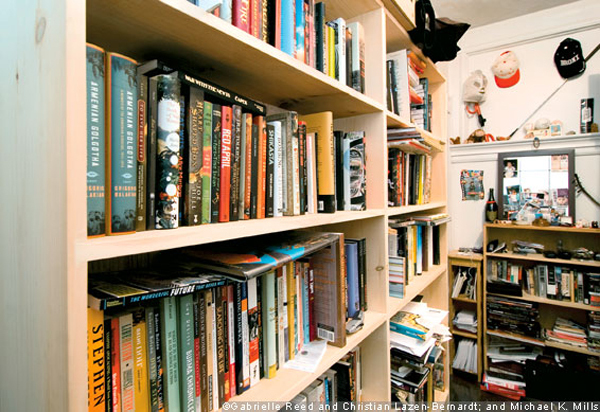
Personal libraries are the things writers' dreams are made of. They're filled with books you love, books you need and books you're just in awe of. With a recent move, mine is made up of a storage room of boxes and I can't wait to finally build the bookshelf I've always wanted (someday...).
Thanks to bloggers like Kyle Cassidy and author Leah Price, we can now enjoy rare glimpses into the personal libraries of our favorite writers.
Here's just a few of the most fascinating private libraries that we all wish we had in our homes. What does your library look like? Let us know!
Thanks to bloggers like Kyle Cassidy and author Leah Price, we can now enjoy rare glimpses into the personal libraries of our favorite writers.
![]() |
| Neil Gaiman - Kyle Cassidy |
Here's just a few of the most fascinating private libraries that we all wish we had in our homes. What does your library look like? Let us know!
![]() |
| Toni Morrison |
![]() |
| Junot Diaz - Leah Price |
| Jennifer Pun (Pre-Unpacking) |
![]() |
| Mark Twain |
Thursday, December 24, 2015
Christmas Countdown - Books in Review
It's Christmas Eve and I'm sure a lot of you are ticking down the last minutes till the end of the workday or some may have started their holidays already! Perhaps you're traveling to see loved ones or staying put and welcoming guests into your home. Or better yet, perhaps you've got time off to snuggle under cozy blankets and catch up on some great reads.
If the latter is in your near future, here are a few books that made the top of my list this year. Not all YA but sure to knock your socks off.
ROOM by Emily Donoghue
I watched the movie, then quickly ordered the book. Word of advice if you happen to watch and read in that order: if you are a sleep deprived mother at one of those schmancy theatres where they let you drink win at your seat, WARNING! Your eyes will become overflowing reservoirs of salty liquid for TWO HOURS!
EVERYTHING I NEVER TOLD YOU by Celeste Ng
Reading Ng's debut is like listening to Adele for the first time. I know, that's a mighty comparison but you don't make it to the top of Amazon's list of 100 Best Books in 2014 because you're average. Ng's story is about characters that love and live and make you want to hug your child.
I think I'm noticing a trend here?
THE NIGHTINGALE by Kristin Hannah
A story of two sisters during WWII who couldn't be more different. The author makes writing strong female characters seem easy - but that's because she does it so well. If you're looking for a study in conflict, this is the book.
Two non fiction books also made my list.
YEAR OF YES by Shonda Rhimes
Shonda, Shonda, Shonda. As blogmate Lauren mentioned, I recommend audio booking this one because Rhimes' voice is like butter and she invites you to drink wine with her. A glass of wine in one hand and Rhimes' voice dancing in your ear and singing words of wisdom (or drink more wine). It's a fabulous treat.
Apparently wine is another trend in my life.
JUST MERCY by Bryan Stevenson
Real, intense. We take a journey with the author as he battles the broken system that is death row. Hooked by the first page.
PAPER TOWNS by John Green
An oldie but a goodie. My YA pick for the year. It's young, it's fun and if you finish the book, you can pick up the movie and compare.
What were your picks of the year?
Happy Holidays!
If the latter is in your near future, here are a few books that made the top of my list this year. Not all YA but sure to knock your socks off.
ROOM by Emily Donoghue
I watched the movie, then quickly ordered the book. Word of advice if you happen to watch and read in that order: if you are a sleep deprived mother at one of those schmancy theatres where they let you drink win at your seat, WARNING! Your eyes will become overflowing reservoirs of salty liquid for TWO HOURS!
EVERYTHING I NEVER TOLD YOU by Celeste Ng
Reading Ng's debut is like listening to Adele for the first time. I know, that's a mighty comparison but you don't make it to the top of Amazon's list of 100 Best Books in 2014 because you're average. Ng's story is about characters that love and live and make you want to hug your child.
I think I'm noticing a trend here?
THE NIGHTINGALE by Kristin Hannah
A story of two sisters during WWII who couldn't be more different. The author makes writing strong female characters seem easy - but that's because she does it so well. If you're looking for a study in conflict, this is the book.
Two non fiction books also made my list.
YEAR OF YES by Shonda Rhimes
Shonda, Shonda, Shonda. As blogmate Lauren mentioned, I recommend audio booking this one because Rhimes' voice is like butter and she invites you to drink wine with her. A glass of wine in one hand and Rhimes' voice dancing in your ear and singing words of wisdom (or drink more wine). It's a fabulous treat.
Apparently wine is another trend in my life.
JUST MERCY by Bryan Stevenson
Real, intense. We take a journey with the author as he battles the broken system that is death row. Hooked by the first page.
PAPER TOWNS by John Green
An oldie but a goodie. My YA pick for the year. It's young, it's fun and if you finish the book, you can pick up the movie and compare.
What were your picks of the year?
Happy Holidays!
Wednesday, December 2, 2015
Twenty Thousand Words and Counting
Now that Nanowrimo is behind us, we can all breathe a collective sigh of relief. Whether you made your 50,000 words or fell short a word or two, the Canadian in me salutes you. You tried, you did your best. No go forth and continue writing!
For me, I've started to see a pattern. One that blogmate Lauren has been helping me to overcome.
It's the "Twenty Thousand Words" mental barrier. That fifty foot fence that creeps up as you hit that word count and all of a sudden nothing seems good, everything you've written is crap and oh my god there's so much more to write but this is all so fricken boring!
It's that point that Lauren pointed out where you've either reached or are about to reach the end of the first act and that gosh forsaken mother of a second act looks like a never ending ocean with no third act in sight.
And let's not forget there's that new shiny toy in the window. That whimsical idea itching your brain that's going to be the next NY Times Bestseller. It's sitting there, cute as a puppy, begging you to play with it instead.
We've all been there and I'm still trying to break that barrier. Luckily I have great blog mates with great tools to help me out. Here's a few that might help you.
Pow Wow with Your Writer Friends
Coffee time, chocolate time, or happy hour. This is when you need your writing buds the most. Maybe they're going through the same thing or have suggestions on how to overcome it. More importantly perhaps they have ideas that may push your project forward. Worst case scenario? A great night out with the gals (and guys).
Plot with Help
During my pow wow with Lauren, she recommended The Plot Whisperer Workbook by Martha Alderson. During Nanowrimo, we right like hell, but sometimes we need a break because we're worried we're going in the wrong direction. But we have no time, cause it's Nanowrimo for gosh sakes! But now it's December and we have some time and this is a good way to plug into some exercises that may help jog your brain or give you a new perspective on your manuscript.
Take a Break!
Seems counter intuitive but your brain needs a breather. Go to the beach or the skating rink or spend time with family and friends. Your brain is still subconsciously working on that book, I guarantee it.
Seek Deadline Motivators
Groups like San Diego Writers Ink have page review sessions with professional writers that meet once a week. This might be just the deadline driven motivator you need to make it to that next five pager. Can't go to a professional meeting? Meetup.com is a great place to find like minded individuals in your area who already meet weekly to do the same thing.
Keep Writing
Self explanatory. It's hard but it's going to feel real good when you write "The End". Then it's onto revisions, yay!
Subscribe to:
Posts (Atom)