I grew up reading Dr. Seuss and of course I loved his stories and his style of writing. In fact, to this day I love alliteration and have used it many, many times over the years. For me, alliteration is fun and makes me smile. Unfortunately, the writing world today seems to frown upon the technique which makes me ever so slightly sad. Why just today, I saw an article that included a list of techniques writers should avoid. Alliteration was at the top of the list.
I can't say that I was shocked since I've read other articles suggesting writers avoid alliteration, but I am still surprised. I can think of several influential writers (Edgar Allen Poe, Emily Dickinson, Robert Frost, Homer, John Donne,etc.) that have used alliteration in their writing. Okay, Okay. Those writers were poets, but even in their prose they used alliteration and effectively. See, alliteration captures the readers' attention and when read aloud has a musical quality thus writers like to use alliteration to reach out to their readers.
So, my take away. Alliteration isn't all that bad. Just use it to attract readers and use it subtly. Happy crafting!

Showing posts with label writing tips. Show all posts
Showing posts with label writing tips. Show all posts
Monday, July 3, 2017

Friday, February 17, 2017
Journaling & Writing
 |
| The journal I'm keeping these days. I love that it's silver, zips up, and has a mark from my hot cocoa mug. Doesn't loving the journal make it so much more fun to write in it? |

"After my husband died, I could not write much - I could not concentrate. I was too exhausted most of the time even to contemplate writing. But I did take notes - not for fiction, but for a journal, or diary, of this terrible time. I did not think that I would ever survive this interlude." --Joyce Carol Oates
Confession: While I'm in a different situation from Joyce Carol Oates, this is the first time in my life I've wrestled with something so hard I've been unable to read or write outside of work (even that has become more challenging). Lately, though, I've been finding that I am able to keep a journal, something I haven't done regularly in many years. I'm really kind of loving it, and I'm not alone. Here are some thoughts from the greats on journaling:
 |
| Even when I'm not journaling regularly, I always love to carry a small Moleskine notebook to jot down ideas, poems, entries, etc. |
“The habit of writing for my eye is good practice. It loosens the ligaments.”
― Virginia Woolf
“A good journal entry- like a good song, or sketch, or photograph- ought to break up the habitual and life away the film that forms over the eye, the finger, the tongue, the heart. A good journal entry ought to be a love letter to the world.”
― Anthony Doerr
“My dear madam, I am not so ignorant of young ladies' ways as you wish to believe me; it is this delightful habit of journalizing which largely contributes to form the easy style of writing for which ladies are celebrated. Every body allows that the talent of writing agreeable letters is peculiarly female. Nature may have done something, but I am sure it must be essentially assisted by the practice of keeping a journal.”
― Jane Austen
"You must stay drunk on writing so reality cannot destroy you." -- Ray Bradbury
 |
| The last time I regularly journaled was in this (only blank page pictured). My best friend took a classic black Moleskine and glued in pics, quotations, etc. as a gift when I left to spend a summer in Israel. Really cool idea if you want to try it. |
"The only thing I have done religiously in my life is keep a journal. I have hundreds of them, filled with feathers, flowers, photographs, and words - without locks, open on my shelves." --Terry Tempest Williams
"When I write notes in my journal, I'm just trying to scribble down as much as possible. Later on, I decide whether to follow some of those first impressions or whether to abandon them." --Natasha Trethewey
"I keep threatening to keep a formal journal, but whenever I start one it instantly becomes an exercise in self-consciousness. Instead of a journal I manage to have dozens of notebooks with bits and pieces of stories, poems, and notes. Almost every thing I do has its beginning in a notebook of some sort, usually written on a bus or train." --Walter Dean Myers
"The first set of lyrics for the first songs I ever wrote, which are the ones on 'Pretty Hate Machine,' came from private journal entries that I realized I was writing in lyric form." --Trent Reznor
"I've always written. There's a journal which I kept from about 9 years old. The man who gave it to me lived across the street from the store and kept it when my grandmother's papers were destroyed. I'd written some essays. I loved poetry, still do. But I really, really loved it then." --Maya Angelou
"I write journals and would recommend journal writing to anyone who wishes to pursue a writing career. You learn a lot. You also remember a lot... and memory is important." --Judy Collins
"For me, writing is a way of thinking. I write in a journal a lot. I'm a very impatient person, so writing and meditation allow me to slow down and watch my mind; they are containers that keep me in place, hold me still." --Ruth Ozeki
What are your thoughts on journaling? Any tips? Favorite styles of journals? Times a journal saved you?
Tuesday, March 8, 2016
An Essential Question to Ask When Writing Teenage Male Characters
What is his relationship with his dad?
Having taught teenagers for over a decade, I have noticed a deep truth with my male students. Their sense of self is deeply tied to their relationships with their dads. I know it sounds obvious, but I'm still surprised how frequently their fathers come up in them defining who they are. My female students talk more about their moms (often as a "best friend"), but don't seem to be as desperate for a connection to/define themselves through/etc. as much.
Even in the literature I teach, so many of the male characters are haunted (in Hamlet's case it's quite literal) by their fathers' wishes.
As I've been thinking about this, I think I need to go back through all of my male characters (even minor ones) and really consider the backstory of their relationships with their fathers, and from here on out I want to do a quickwrite on that relationship when I create a character. I probably won't use any of the quickwrite, but I need to consider the question more deeply if I want to flesh out my male characters more.
Some sub-questions to consider:
*Is his dad in his life?
*How often does he see his dad?
*How many minutes per day (on average) do they talk?
*How does his dad treat his mom?
*How does his dad treat women in general?
*Is his dad in a career he likes?
*Does his dad consider himself "successful"?
*Does he consider his dad "successful"?
*When is his dad most proud of him?
*Does his dad have any unfulfilled dreams he is putting on his son?
*Is his dad happy?
*When does he do his best bonding with his dad? What are they doing at the time?
*If his dad is not in the picture, who is the closest he has to a "father figure" and how do these questions relate to him?
*Is his dad religious? Political?
*What does he see as the way he is similar to his dad?
*How does he differentiate himself from his father?
*Does he feel loved by his father?
*What does he desperately hope to do differently than his father?
*What does the family name mean to him?
Having taught teenagers for over a decade, I have noticed a deep truth with my male students. Their sense of self is deeply tied to their relationships with their dads. I know it sounds obvious, but I'm still surprised how frequently their fathers come up in them defining who they are. My female students talk more about their moms (often as a "best friend"), but don't seem to be as desperate for a connection to/define themselves through/etc. as much.
Even in the literature I teach, so many of the male characters are haunted (in Hamlet's case it's quite literal) by their fathers' wishes.
As I've been thinking about this, I think I need to go back through all of my male characters (even minor ones) and really consider the backstory of their relationships with their fathers, and from here on out I want to do a quickwrite on that relationship when I create a character. I probably won't use any of the quickwrite, but I need to consider the question more deeply if I want to flesh out my male characters more.
Some sub-questions to consider:
*Is his dad in his life?
*How often does he see his dad?
*How many minutes per day (on average) do they talk?
*How does his dad treat his mom?
*How does his dad treat women in general?
*Is his dad in a career he likes?
*Does his dad consider himself "successful"?
*Does he consider his dad "successful"?
*When is his dad most proud of him?
*Does his dad have any unfulfilled dreams he is putting on his son?
*Is his dad happy?
*When does he do his best bonding with his dad? What are they doing at the time?
*If his dad is not in the picture, who is the closest he has to a "father figure" and how do these questions relate to him?
*Is his dad religious? Political?
*What does he see as the way he is similar to his dad?
*How does he differentiate himself from his father?
*Does he feel loved by his father?
*What does he desperately hope to do differently than his father?
*What does the family name mean to him?
 |
| My dad, brothers, and husband at my wedding |
Wednesday, November 18, 2015
Ten Things to Do When You're LOSING YOUR MIND During NanoWriMo
If you are still hanging in there during NaNoWriMo, CONGRATS! (you are seriously amazing. To make it this far is really really hard) This is also often when it gets even more challenging to push through and keep going so here are some ideas to help you refresh and make it to your goal.
10. Breathe. Seriously. Inhale, count to ten, exhale. Repeat 5-10 times.
9. Bribe yourself. What will you get when you hit your word count? Bubble bath? McDonalds drive-thru french fries? An episode of The Big Bang Theory? Finally try out that soothing facial mud mask you got in Birchbox last month?
8. Take a ten minute walk around your block, and notice your setting. Dostoevsky took long walks most days when he was writing Crime and Punishment, and it turned out pretty well for him.
7. Find a picture of your someone who looks like your ideal reader and put it next to your screen so that you can look at him/her and remember why you're writing the book to begin with. What does he/she need to hear? Why does he/she need you to complete this book?
6. Read one paragraph from the writer you most admire. Notice what you love about his/her writing, and get excited about trying to infuse that in your draft.
5. Chocolate. That is all.
4.Throw something. If you want to be mature, you can play a bit of catch, but when I'm really frustrated, I like to find a blank wall and throw unbreakable objects at it until the frustration turns into comedy.
3. Get in nature. Look at beautiful pictures of nature. Watch a web cam of nature. If the Pandas are sleeping, check out wolves or birds or something else beautiful from one of the cameras on these sites Maybe consider the ways your characters are animals and the ecosystem in which they operate and riff on that for a bit.
2. Go on Twitter and challenge someone to a one-hour word-count write-off. Use the hashtag #amwriting or #nanowrimo and see if anyone bites.

1. Dance Party!!!!! This is by far my favorite. I throw a record on (yes. I like my T. Swift better on vinyl) and jump around in socks as much as I can for the duration of a single song. It gets my blood flowing, and makes me feel like I can do anything in life if I choose the right song. By the time the song is over I'm ready to dive back in.
Good luck, and remember, YOU CAN DO THIS. For every page you've written so far, I'm proud of you, I believe in you, and I wish you all the best.
XOXO,
Lauren
10. Breathe. Seriously. Inhale, count to ten, exhale. Repeat 5-10 times.
 | |||
| Face mask reward= good for sleepless skin |
9. Bribe yourself. What will you get when you hit your word count? Bubble bath? McDonalds drive-thru french fries? An episode of The Big Bang Theory? Finally try out that soothing facial mud mask you got in Birchbox last month?
8. Take a ten minute walk around your block, and notice your setting. Dostoevsky took long walks most days when he was writing Crime and Punishment, and it turned out pretty well for him.
 |
| Walking at sunset isn't a bad idea |
7. Find a picture of your someone who looks like your ideal reader and put it next to your screen so that you can look at him/her and remember why you're writing the book to begin with. What does he/she need to hear? Why does he/she need you to complete this book?
6. Read one paragraph from the writer you most admire. Notice what you love about his/her writing, and get excited about trying to infuse that in your draft.
5. Chocolate. That is all.
 |
| Or get a hot chocolate in nature :) |
4.Throw something. If you want to be mature, you can play a bit of catch, but when I'm really frustrated, I like to find a blank wall and throw unbreakable objects at it until the frustration turns into comedy.
3. Get in nature. Look at beautiful pictures of nature. Watch a web cam of nature. If the Pandas are sleeping, check out wolves or birds or something else beautiful from one of the cameras on these sites Maybe consider the ways your characters are animals and the ecosystem in which they operate and riff on that for a bit.
2. Go on Twitter and challenge someone to a one-hour word-count write-off. Use the hashtag #amwriting or #nanowrimo and see if anyone bites.

1. Dance Party!!!!! This is by far my favorite. I throw a record on (yes. I like my T. Swift better on vinyl) and jump around in socks as much as I can for the duration of a single song. It gets my blood flowing, and makes me feel like I can do anything in life if I choose the right song. By the time the song is over I'm ready to dive back in.
Good luck, and remember, YOU CAN DO THIS. For every page you've written so far, I'm proud of you, I believe in you, and I wish you all the best.
XOXO,
Lauren
Wednesday, March 18, 2015
Writing Disabled Characters

Last month I attended a really insightful meeting at WGA in Los Angeles, and I met the coolest writer/totally adorable new friend there, the lovely Lara Ameen. The best part of it is that she's an expert in writing characters with disabilities (she even has a degree to prove it), and she's willing to share her wealth of knowledge with us.
In her own words:
Why Disability Portrayal in the Media?
As a woman with cerebral palsy, I think it's important for people with disabilities to be represented both in front of and behind the camera. There are taboos associated with disability. That it's scary or something to be feared. People don't know what to say or will not know how to provide proper accommodations, etc. Disability is the most underrepresented minority in the media yet anyone at any point in their life can become disabled. It's important to include accurate portrayal of disability representation in fiction, film, television and online media because otherwise those stories will not be told. There's a saying that originated in the disability community: "Nothing about us without us." Will you tell us more about how to write characters? Of course. Here is a link to a presentation: https://vimeo.com/116270997
Some of the highlights from the presentation (totally worth watching the whole thing just for the video clips alone):
*There are two models of disability studies. 1. The medical model: The problem with the disabled is that there is a problem with the person, and they are miraculously cured of the disability by the end of the story (BAD) 2. The social model: Stigmas, attitudes, etc. in society about someone with disabilities are more problematic than the disability itself.
*Don't be afraid of going to all the normal places you'd go with other characters (if you would've written a sexy scene for your character, don't stop just because they're disabled! Everybody needs some lovin')
*Introduce people by their NAMES and not their disabilities (person-first language)
*Avoid these common stereotyping traps: The victim (don't define your character as a victim just because they're disabled), the hero (don't define them as a hero because they overcame their disability to become more normal) , and the villain (portrayed in crime/taking revenge as a portrayal of mental illness and how that makes them bad).
*Hint: Check out My Gimpy Life
Finally, who is Lara Ameen? I've wanted to be a writer since I was nine years old (3rd grade). I had a Spottie Dottie notebook from the Sanrio store that I would write in all the time. I also wrote short stories and plays that I would perform with my friends. I love singing and acting, too, and participated in musical theatre, various community theatre productions and was active in choir class from third grade until community college. I also took some private voice lessons. So I have some performance background, but I LOVE to write! I wrote songs, poetry and fanfiction in high school. I've actually known I wanted to go to graduate school and get an MFA since I was 15. Later, in college when I wasn't in screenwriting classes (there are only 2 at Berkeley), I was writing on my own. I'm interested in TV writing, so I started to write comedy and drama spec scripts and my friend and I wrote a drama pilot together. I also minored in Disability Studies and interned at various disability rights non-profits in Berkeley, which ignited my love for disability advocacy and activism. My minor has definitely influenced my work in many ways. My Screenwriting professor, Mira, at Berkeley also ended up becoming my mentor. I credit her in my decision to pursue an MFA in Screenwriting at Cal State Northridge.
To stay connected to Lara's witty insights, follow her on Twitter at @trucherrygirl and follow her blog at https://cherrylara.wordpress.
Monday, March 2, 2015
How to Write Dialogue Tags With Action
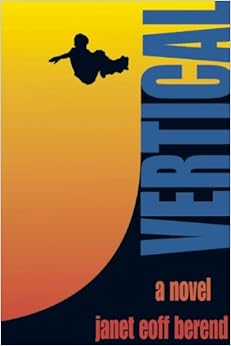
Janet found herself using the same actions too frequently so she started writing down actions associated with dialogue as she watched people in real life or in her reading so she could break herself away from old patterns. I started jotting things down as well and found it insanely useful. Here are some of my findings. Feel free to add ones you discover in the comments section. :)
- scanning the titles of books in the bookcase.
- shook his head
- sat back in the soft leather chair.
- unwrapped a stick of Juicy Fruit gum
- motion to the radio
- bite my lip
- give him a small smile
- waved my unasked question away with his hand
- he fumbled about for silverware
- he coughed again and took a deep breath
- he gazed at me intently, his eyes narrowing
- his voice had a strange almost wistful quality to it
- put my hand on his shoulder
- closes her computer
- gets herself a generic soda that is clear and citrus-y
- took a single step and was swallowed up by the crowd
- he did not turn
- glancing down at his program
- leaned forward toward him, smelling his familiar smells
- extending her hand to him formally
- reaching for a plate of cake
- a tear edged itself out of her eye
- I replace the chair beneath the desk
- Plus a TON of the usual "he sighed," "she smiled," etc. etc.
 |
| Janet Eoff Berend |
*Note: None of these involve the character doing something else with his/her mouth while talking (okay to do after character finishes speaking) as that is quite difficult to do in real life. :)
Personally, I've loved flipping through my favorite authors' books & discovering the way they use dialogue tags for effect and seeing the ones they tend to rely on. Thanks again to Janet Eoff Berend for the tip and if you haven't checked out Vertical yet, I HIGHLY recommend it (especially if you're looking for a book for reluctant boy readers that involves cool San Diego skate park kids) :)
Saturday, February 7, 2015
Sundance 2015 from a Writer's Perspective

I’m a conference junkie, and one of my favorite places to
pick up tips on the art of the story is Robert Redford’s film festival Sundance
in Park City, UT. While seeing premiers of movies can be fun, and the parties
often border on the outrageous, the gem of Sundance (at least for my best friend and me) is the panels. I’m
also intrigued by how often places like Sundance set the zeitgeist in motion,
and am on the lookout for how trends originate and which marketing teams are
most effective.
Here are some of my key takeaways this year:
--Sara Silverman on selfishness (a unifying theme this year was a
disdain for selfishness) “self-hate is not modesty. It’s self-centered. There’s
no room for anybody else.”
--“The Golden Age of TV” panel spent a decent chunk of time
talking about long-form storytelling now that we have the Netflix binge. I
couldn’t help but think about how the long-form novel rose up in tandem (The
Goldfinch=Pulitzer last year). Will we see an official YA novel follow suit
soon?
--The TV panel also talked about the importance of creating
the moment when “the character becomes real for us” and I was surprised that
most of the clips chosen were not from the first episode. I appreciated how slowly the
writers liked to build the façade first.
--RJ Mitte of Breaking Bad led a thoughtful panel on
shifting perceptions in our society by including a more realistic landscape of
complex characters of all colors and “different-abilities.”

--Even Johnny Knoxville is obsessed with craft. He watches
old classic cartoons over and over for inspiration and to get timing just right
on stunts, and will re-do as many times as necessary (revision) until they fit
conventions of a specific cartoon.
--At the party for The Abolitionists (story of former CIA/FBI guys who freelance save girls from


--One of the trends in films chosen/submitted this year was
rape/sexual assault stories, and the panel emphasized the need to speak openly,
non-judgementally, and with complexity (include the perpetrators) in our
stories in order to really address/make better what is happening in our
society. (I have also officially added Pat Mitchell and Regina Scully to my list
of heroes. Lin Oliver, Kevan Lyon, and Andrea Davis Pinkney have some company on the list
now).

--On promotional branding: AirBnB house did an amazing job at integrating their message with their promotional activities. To mirror the idea of building community in their brand, they had people drawing portraits of others, and it was a really popular/memorable stop (always a line) for the artsy crowd (really knew their target audience).
Wednesday, January 28, 2015
How can Life's Challenges Shape us?
The other day in my English class, I was given the writing prompt: How can Life's Challenges Shape us? I could have easily gone with my own experiences. This year has been difficult for me. I've been constantly sick. First, I had Strep Throat, then Flu A, a broken foot, and finally, Mono. As a result, my grades aren't where I'd like them to be. They are good enough, but could have better if I hadn't missed so much school.
I could have easily chosen to write about my illnesses, but since this was a practice writing prompt for a standardized test, I decided that I'd better follow the format we'd learned which was to include an example from a book and from a movie. I did exactly that and I made a 100 on my paper. This got me thinking.

Is the writing industry so formulated as well? Based on my limited research. . . um, yes . . . there is some expectations to follow. Some tips include: Follow the story arc; include universal themes and emotions; avoid clichés, adverbs, and adjectives; fifty percent of the writing should be dialogue; write what you know, but with your own unique twist; and make sure you have your own voice.
So, this year I will be working on trying to reign in and shape my wild ideas into a more universal story and hope for the best. I can't promise that I'll master the art or that I'll even get published, but all I can do is work on my craft and grow as a writer. Happy writing!

I could have easily chosen to write about my illnesses, but since this was a practice writing prompt for a standardized test, I decided that I'd better follow the format we'd learned which was to include an example from a book and from a movie. I did exactly that and I made a 100 on my paper. This got me thinking.
Is the writing industry so formulated as well? Based on my limited research. . . um, yes . . . there is some expectations to follow. Some tips include: Follow the story arc; include universal themes and emotions; avoid clichés, adverbs, and adjectives; fifty percent of the writing should be dialogue; write what you know, but with your own unique twist; and make sure you have your own voice.
So, this year I will be working on trying to reign in and shape my wild ideas into a more universal story and hope for the best. I can't promise that I'll master the art or that I'll even get published, but all I can do is work on my craft and grow as a writer. Happy writing!
Wednesday, January 7, 2015
Using Setting to Create Tension

Like most women my age with hipster tendencies, when the TV show New Girl launched, I was hooked. Not only was Zooey D. adorable, Schmitt the epitome of "that guy" who seemed to be at every party (side note: the opening episode characterization of him via "douchebag jar": brilliant), but when episode 12 came ("The Landlord"), it gave me one of my favorite writing lessons to date.
If you wish to re-live my epiphany for $1.99 & 22 minutes of your life, I encourage you to watch it here before continuing to read on so you get the full shock-value of the build-up (Warning: it is centered around prime-time-level morally-offensive dating/sexual discussion)
http://www.amazon.com/The-Landlord/dp/B0076USL30
Synopsis: The show opens with Jess and Nick debating whether or not people are good or bad. Jess spends the rest of the show attempting to prove to Nick that men are good by befriending their onerous landlord. Nick is certain that the landlord is only kinder because he wants to sleep with Jess, and pushes the situation deeper and deeper, ultimately ending up heading to a threesome with the landlord (landlord's idea) because Jess refuses to admit that she was wrong, and Nick won't end the landlord's advances until she does. Ultimately Jess concedes just as the landlord bails out when another roommate cluelessly walks on set, and the landlord refuses "a foursome."
Writing Lesson: The funniest part of the entire episode to me: lunges. When Nick and Jess were avoiding heading into the room, in the background the reader can see the landlord doing lunges. I died laughing. Close second funniest moments: the landlord dancing around pretending to play the flute to Rusted Root in the background, and Jess's awkward hands shooting out dancing in the background while the landlord puts the moves on Nick.
When I was trying to describe what was so funny about this episode to a friend, I kept coming back to these scenes, and I noticed that they were all in the BACKGROUND. I realized that by providing understated slapstick comedy juxtaposed against awkwardness, it heightened both the emotions. Tension was pulled between the foreground and the background.
Since then, I've been playing with what's happening in the foreground and what's happening in the background of my setting in order to add depth, complexity, and/or humor in my writing. Or, at least that's the goal, but I like that I have this goal now. Sometimes I want to add both terror and hope so I can use foreground and background to hit both notes mirroring my character's mood, or I want to foreshadow desire, but create complacency in the now so I can use one for each. And sometimes I want to just create a richness of humor so there we go... Lunges. Lunges, people. Lunges!
Monday, October 6, 2014
Writer's Resource: Pub(lishing) Crawl
One of the best times of my day is when I pull up my blog reader (usually on my phone these days, since the baby makes laptop time scarce) and read the new posts. I follow a few dozen writing blogs, some written by agents, some by editors, and some by aspiring or published authors.
I find myself bookmarking posts from one of them far more frequently than any of the others, so I thought it would be a good idea to highlight it here as a writer's resource.

Pub(lishing) Crawl is, in their own words, "...a group of authors and industry professionals (formerly known as Let the Words Flow) who blog about all things writing, publishing, and books!"
According to their Who We Are page, there are currently 16 contributors, including editors, a bookseller, a sales rep, and authors. They post on a huge variety of topics, including writing and editing techniques, new book releases, and tips on how to survive life as a published author. They also host giveaways and often feature guest bloggers, so there's always a good reason to check back frequently.
What are your favorite writing-related blogs?
Wednesday, March 12, 2014
Characterization Questionnaire Template: Bachelor/ Bachelorette Edition

Confession: I may (or may not) have filled out a Bachelor application for one of my friends in the past...possibly without his permission. In doing so, I might have learned that through answering the questions a strong sense of who a person is romantically comes across in the answers.
Soooo....if you're feeling a bit of post-Bachelor depression and missing all the Juan-puns of the past few months (Juanuary, anyone???), and are looking to up the romance in your novel, feel free to run your characters through one of these little applications (the first few pages you'll need to skip or shrink down to YA, though, as they probably have not been married with children yet :) ).
Here is a link to the actual application
And here are a some additional questions I'm going to add for you to answer from the perspective of your character:
1. Do you like Pina Coladas (virgin or not)?
2. Thoughts on getting lost in the rain?
3. When you daydream about a perfect first kiss where is it?
4. During said kiss, what would you be thinking about?
5. Have you ever lied and told someone you loved him/her when you didn't?
6. Most romantic movie of all time?
7. Describe your parents' relationship. Do you want to be with someone like your mom/dad?
8. That secret thing you're sure he/she will dump you for if he/she finds out?
9. When was the first time you realized you liked someone? Grade? Why?
10. Thing a guy/girl could do to lose your love faster than you can say you "love pina coladas and getting lost in the rain"?
Wednesday, February 12, 2014
Teen Voice

Writing the teen voice isn't easy. We often stereotype it as whiny, dramatic, and sarcastic, but I'm not really a fan of that stereotype, or of its sometimes-portrayal in YA lit. I'm around teens every day, and one of my favorite things about them is their ability to inspire me. Sure, they're often whiny, dramatic, and sarcastic, but they also have this amazing capacity to wonder and to believe that they have the ability to make the world a better place. For those of you who want a reminder of the wonder and inspiration teens are capable of giving us I recommend listening to them at their best. Here's a link to TEDxTeen. There are several teen speakers here who fill me with humility, awe, and wonder in the midst of their their awkward pimple-cream-wearing era in life. Enjoy.
http://www.tedxteen.com/
Tuesday, December 31, 2013
What I Hope to See More of in YA in 2014
As we say good-bye to 2013 it is a time of reflection, but also looking forward. Here are some of the things I'd love to see in YA Lit in the upcoming year.

 3. Crisp quick details so specific that I know the brand of chocolate bar the character prefers. I especially like food details. Love knowing the very specific dietary habits of the characters I read about. Is that strange? Maybe. But you can learn a lot about a character by what he eats. I once heard a journalist say that all she needed to do was to look in someone's fridge to know who they were. I think it's true.
10. More smells. I've always thought that smell was the most under-utilized of the senses, which is a shame because it's been proven to trigger memory the best.
9. Animals. Real animals. Wild animals. Not mythical creatures, or hybrids, or any of that. I'm not even craving a good girl/pet horse story, but something more primitive and raw. If nothing else, the covers could be gorgeous as a lot of pop art has gone to realistic animal pieces.
8. Similes that make me laugh.
7. Fascinating interiority. Not the simplistic happy/sad/frustrated, etc., but the really odd and nakedly revealing free associations man makes when looking around. I can watch carefully and see most of what you "show" me, but I'm always looking around wondering what's going on inside when someone has a glazed-over look. Books are the only way to poke around there.
6. Diversity. But not diversity for diversity's sake, or anything too culturally charged. I want my students reading books where they find other races, religions, sexual-orientations, perceived disabilities, etc. as their equals/the norm, and not some oddity to put in the box of "other."
5. Wide open spaces.
4. Layered phrasing. I love subtle uses of puns, even heavily-overused terms like "darkness," "weight," etc. if they are used in a fresh way.
3. Crisp quick details so specific that I know the brand of chocolate bar the character prefers. I especially like food details. Love knowing the very specific dietary habits of the characters I read about. Is that strange? Maybe. But you can learn a lot about a character by what he eats. I once heard a journalist say that all she needed to do was to look in someone's fridge to know who they were. I think it's true.
2. The best piece of life-wisdom the author has gleaned in his/her 20-30-40-50-60-whatever years on this planet thrown haphazardly into the work. Perhaps even by the most foolish character. Maybe as a joke. Shakespeare was great at this technique.
1. More writers slowing down and enjoying the ride. When I went to hear Yann Martel speak at The LA Times Festival of Books (btw if you haven't ever gone, you should go) he said that the happiest time of his life was the period when he was poor and struggling and writing Life of Pi. I've heard several established authors talk about the soul-killing work of peddling your published books. If you aren't published yet, it can be a lucky thing to have a room of your own and time to think about words, their sounds, their meanings, and creating worlds with only the rattle of keystrokes as your guide.
Love you all. Thanks for reading in 2013!
XOXO
--Lauren
Wednesday, January 30, 2013
January NaNo Wrap-up and Tips
As you may recall, I've been doing my own NaNo thing for the month of January. My goal was to write 50,000 words by the end of the month.
As of last night, I'm at 49,181. Barring any ridiculous circumstances that would prevent me from writing only 400 words for the next two days, I think I can safely say I'm going to make my goal!

- 1613 words per day is really not that many words. On average, I'd say it took me one and a half to two hours. My preference was to spread the time out over the course of the day. The writing felt much less difficult/sloggy when I spread the time out over fifteen or twenty minute intervals.
- Stopping when I hit the word count, even if I felt like I could go much longer, was crucial for my forward progress. It was so much easier to start my words the next time, since it wasn't hard to pick up the momentum from the day before. And this helped me avoid burnout or feeling like I needed a break between writing days.

- I'm a planner rather than a pantser, so having an outline before I started was vital. Even with my very detailed outline, there were still places I could have done better—on several days, I lost precious writing time researching or figuring out plot points I should have worked out earlier.
- I got my friends and family on board before I started. This way everyone understood if I said I had to bow out of something because my daily target hadn't been met yet.
- The absolute best motivation for me was entering my word count into my WriteTrack counter every day and watching the graphs climb. There was one hectic day where I only managed to get to 75% of my word target for the day—and I was so upset that my pretty graph looked crappy that I worked really hard to get my numbers up again!

I'm really happy I'm on track to meet the goal I set for myself, but more importantly, writing has become a daily habit for the first time in my life. This is true to the point where I'm even contemplating maintaining my January schedule into February, at least until the first draft of this WIP is done.
If you want to make writing a daily habit too, try your own NaNo! It's easier than you think.
Monday, January 7, 2013
Writer's Resource: Search Twitter for Relevant Information
Hello out there! This is our first Writer's Resource post in a while, but it's a good one.
I talked about how useful Twitter can be in a previous post (Twitter-ific: Twitter for Writers), but did you know you can also use it as a tool to find specific information?
 I learned about this method from one of the Literary Rambles website's brilliant Tip Tuesday posts.
You can use Google to search through an agent's posts to see if they've said anything recently that might be relevant to you or your manuscript (such as "Even though my website says I like contemporary, I'm not the right agent for contemporary romance" or "You can send me queries, but I'm really not looking for new clients right now"--both statuses I've actually seen!). Often you'll find much more up-to-date information via Twitter than on an agency website or blog.
Here's how it works: in the Google search bar, type site:twitter.com/[twitter user name, without the @ sign]. Then type your search term.
Here's an example. Let's say I wanted to find out what Janet Reid (one of my favorite Twitter agents!) has been saying about mystery novels recently. I would type the following:
 This takes me to a list of her recent comments on Twitter that include the word mystery.
I talked about how useful Twitter can be in a previous post (Twitter-ific: Twitter for Writers), but did you know you can also use it as a tool to find specific information?

You can use Google to search through an agent's posts to see if they've said anything recently that might be relevant to you or your manuscript (such as "Even though my website says I like contemporary, I'm not the right agent for contemporary romance" or "You can send me queries, but I'm really not looking for new clients right now"--both statuses I've actually seen!). Often you'll find much more up-to-date information via Twitter than on an agency website or blog.
Here's how it works: in the Google search bar, type site:twitter.com/[twitter user name, without the @ sign]. Then type your search term.
Here's an example. Let's say I wanted to find out what Janet Reid (one of my favorite Twitter agents!) has been saying about mystery novels recently. I would type the following:
 This takes me to a list of her recent comments on Twitter that include the word mystery.
Pretty cool, huh?
Tuesday, August 28, 2012
More Lessons from LA SCBWI - Confident Writing
While attending the LA SCBWI there was one theme that continued to percolate for me – confident writing.
I’m not talking about confidence in your actual writing ability (although every writer needs to be confident in their story telling craft to be successful.) I’m talking about having confidence in your reader, and letting that trust shine through by what you don’t say in your story.
How often as a writer do you feel the need to explain something to the reader? Perhaps it’s an emotion you want to share with the reader, so you tell them how your character is feeling. Or maybe there’s a recurring theme you want your book to have, so you tell it to the reader. Several times. Because you really want to make sure they get it.
Often times it’s referred to as telling, but it’s also a perfect example of a writer that doesn’t trust that their reader will figure things out on their own.
A confident writer believes in their reader. Confident writers trust that if they paint the details, the reader will be able to see the whole picture.
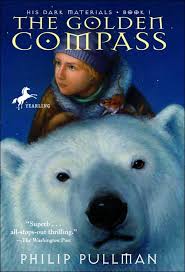
Take The Golden Compass as an example. In the first few chapters we are introduced to Lyra – a curious little girl. But Philip Pullman never actually says “Lyra is a curious little girl” so how do we know she’s curious? We know because he shows us.
In the first scene we see Lyra snooping around the dining and retiring rooms of her school. It’s in her simple actions that we start to uncover Lyra’s curious nature, not in the explicit words Pullman uses. She flicks a glass. She studies the table setting. She explores her surroundings. She eavesdrops. These are all actions that demonstrate curiosity without once ever using adjectives associated with the word curious.
Pullman very easily could have used a dialogue tag to explicitly tell readers about Lyra’s nature:
“What d’you think they talk about?” she whispered curiously.
But he never does this, because he never needs to. He has confidence that his reader will pick up on her character traits through her actions.
 Another fantastic example of confident writing can be seen in the first chapter of The Hunger Games. Suzanne Collins never expressly tells us that Katniss is a survivor, or that she feels responsible for taking care of her family. Instead, she shows us Katniss’ hardened persona when she describes her reaction to the cat. What kind of person wants to drown a kitten so they will have one less mouth to feed? What kind of person spares a kitten’s life because her sister begs her not to drown it? It is through these actions and reactions that we come to see who Katniss is as a person, not simply through adjectives, adverbs and explicit explanations.
The next time you’re reading through your manuscript, ask yourself – what am I explicitly telling the reader that they can figure out on their own? Is there a way I can showcase that emotion or character trait through actions and reactions versus explanation? Are there explanations I can take out that won't take away from the story? If so, you may be over-telling.
I’m not talking about confidence in your actual writing ability (although every writer needs to be confident in their story telling craft to be successful.) I’m talking about having confidence in your reader, and letting that trust shine through by what you don’t say in your story.
How often as a writer do you feel the need to explain something to the reader? Perhaps it’s an emotion you want to share with the reader, so you tell them how your character is feeling. Or maybe there’s a recurring theme you want your book to have, so you tell it to the reader. Several times. Because you really want to make sure they get it.
Often times it’s referred to as telling, but it’s also a perfect example of a writer that doesn’t trust that their reader will figure things out on their own.
A confident writer believes in their reader. Confident writers trust that if they paint the details, the reader will be able to see the whole picture.
Take The Golden Compass as an example. In the first few chapters we are introduced to Lyra – a curious little girl. But Philip Pullman never actually says “Lyra is a curious little girl” so how do we know she’s curious? We know because he shows us.
In the first scene we see Lyra snooping around the dining and retiring rooms of her school. It’s in her simple actions that we start to uncover Lyra’s curious nature, not in the explicit words Pullman uses. She flicks a glass. She studies the table setting. She explores her surroundings. She eavesdrops. These are all actions that demonstrate curiosity without once ever using adjectives associated with the word curious.
Pullman very easily could have used a dialogue tag to explicitly tell readers about Lyra’s nature:
“What d’you think they talk about?” she whispered curiously.
But he never does this, because he never needs to. He has confidence that his reader will pick up on her character traits through her actions.
The next time you’re reading through your manuscript, ask yourself – what am I explicitly telling the reader that they can figure out on their own? Is there a way I can showcase that emotion or character trait through actions and reactions versus explanation? Are there explanations I can take out that won't take away from the story? If so, you may be over-telling.
Go back and reread the first chapter of your favorite books with an eye for confident writing. The more you can develop an eye for what works in other stories, the more you'll be able to apply those tactics to your own writing.
Most importantly, have faith in your reader. Give them a beautiful story, and trust that they will be able to read between the lines. (Pun intended!)
Most importantly, have faith in your reader. Give them a beautiful story, and trust that they will be able to read between the lines. (Pun intended!)
Happy writing!
Tuesday, August 14, 2012
Writer's Resource: Voice Lessons (not the singing kind) From LA SCBWI
So I almost forgot that I had a post scheduled for today, because I've been spending every single free second stalking the WriteOn forums. There are so many great writers out there! Hop on over and take a look if you haven't already.
Also, quick announcement about an upcoming query workshop - Brenda Drake and three other fabulous writers will critique 40 query letters on August 20-24. Check out her blog to learn more. Winners will be chosen on Friday, 8/17.
Now on to my regularly scheduled (but almost missed because of WriteOn) post.
Developing a character's voice is a tricky thing, and while at SCBWI's LA conference I had the good fortune of attending several workshops that addressed the topic of voice.
Voice is more than the words your character says or the actions/reactions your character has to their situation. Voice is in how your character sees the world around them - every detail about your character should act as a filter for what your character comments on, be it through dialogue or internal monologue.
Picture three different characters walking down the same street - a cement layer, a florist and a bird watcher. The cement layer would probably notice cracks in the concrete, or uneven places in the pavement. The florist would probably not comment on the street at all, because he is too busy admiring the foliage that lines the road. The bird watcher wouldn't notice anything below her neck, because she's too busy looking up at the sky.
Think about who your character is and how those details might affect the way he or she sees the world, then bring that world view into your writing. If you are writing in first person or third person close, you should never deviate from that world view, because it is a reflection of who your character is.
A few exercises that may help develop your character's world view and voice:
1. Write a series of journal entries from your MC's POV. What kinds of things are important to him/her? How do they spend their day? What language do they use? How do they feel? Start thinking of your character as more than a person from your story - think of them as an actual person, and start to put yourself into their shoes.
2. Write down a series of adjectives that describes your character. Now start replacing each word with an antonym. How would these words change your character's actions? Their dialogue? The word choice? Understanding what your character shouldn't do can often help you make smarter choices about what they should be doing.
3. Go back and read the first few pages of your favorite books. What did the author do to set up the story? The character? How quickly did you get a sense of who this new person might be? How does one character feel versus another character from an entirely different story? Why do they feel different to you?
4. Read the award winners, both in your genre and out of your genre. Pulitzer prize winners are often a great place to start, because they almost always have rich, complex characters that hop off the pages right from the opening paragraph.
The key takeaway for me was that developing voice takes practice and patience - it can't be forced. Practice, read, and practice some more.
Now back to the WriteOn forums...
Happy writing!
Also, quick announcement about an upcoming query workshop - Brenda Drake and three other fabulous writers will critique 40 query letters on August 20-24. Check out her blog to learn more. Winners will be chosen on Friday, 8/17.
Now on to my regularly scheduled (but almost missed because of WriteOn) post.
 Voice Lessons (not the singing kind)
Developing a character's voice is a tricky thing, and while at SCBWI's LA conference I had the good fortune of attending several workshops that addressed the topic of voice.Voice is more than the words your character says or the actions/reactions your character has to their situation. Voice is in how your character sees the world around them - every detail about your character should act as a filter for what your character comments on, be it through dialogue or internal monologue.
Picture three different characters walking down the same street - a cement layer, a florist and a bird watcher. The cement layer would probably notice cracks in the concrete, or uneven places in the pavement. The florist would probably not comment on the street at all, because he is too busy admiring the foliage that lines the road. The bird watcher wouldn't notice anything below her neck, because she's too busy looking up at the sky.
Think about who your character is and how those details might affect the way he or she sees the world, then bring that world view into your writing. If you are writing in first person or third person close, you should never deviate from that world view, because it is a reflection of who your character is.
A few exercises that may help develop your character's world view and voice:
1. Write a series of journal entries from your MC's POV. What kinds of things are important to him/her? How do they spend their day? What language do they use? How do they feel? Start thinking of your character as more than a person from your story - think of them as an actual person, and start to put yourself into their shoes.
2. Write down a series of adjectives that describes your character. Now start replacing each word with an antonym. How would these words change your character's actions? Their dialogue? The word choice? Understanding what your character shouldn't do can often help you make smarter choices about what they should be doing.
3. Go back and read the first few pages of your favorite books. What did the author do to set up the story? The character? How quickly did you get a sense of who this new person might be? How does one character feel versus another character from an entirely different story? Why do they feel different to you?
4. Read the award winners, both in your genre and out of your genre. Pulitzer prize winners are often a great place to start, because they almost always have rich, complex characters that hop off the pages right from the opening paragraph.
The key takeaway for me was that developing voice takes practice and patience - it can't be forced. Practice, read, and practice some more.
Now back to the WriteOn forums...
Happy writing!
Subscribe to:
Posts (Atom)