
Showing posts with label Writing tip. Show all posts
Showing posts with label Writing tip. Show all posts
Tuesday, July 25, 2017
Word Count
I'm still in school so capping writing is important. I don't usually have a word count, but I usually have a page limit. This summer as I write scholarship and college essays, I've encountered my worst limit of all - the word count. Sure, as a writer, I've faced that but before, but some of these essays want no more than 250 words. Ugh! Good news it really has made me focus on my word choices. Thus my tip this month if you tend to be wordy is to write essays with a 250 cap. Once you get used to the pain, it is kind of fun!

Monday, December 19, 2016
Write a book by writing letters.
I have posted this tip before - when writing pretend to write to someone you know - by the way, this was one of Stephen King's ideas. The idea is that writing a letter can help you keep the audience in mind and really connect with them. Pretty neat trick, eh?!

Well, over the past year, I've come across a few examples of this and thought the books were pretty cool. Perhaps the best example I've seen of this is so far was in the children's book, Unusual Chickens For The Exceptional Poultry Farmer by Kelly Jones.
This book was a fun read and was written entirely out of a series of a few letters. I really enjoyed the freshness of this book and others like it. Hmm, maybe these writers on to something. Can't wait to try it out now!!!
Happy writing . . . and of course reading!

Well, over the past year, I've come across a few examples of this and thought the books were pretty cool. Perhaps the best example I've seen of this is so far was in the children's book, Unusual Chickens For The Exceptional Poultry Farmer by Kelly Jones.
This book was a fun read and was written entirely out of a series of a few letters. I really enjoyed the freshness of this book and others like it. Hmm, maybe these writers on to something. Can't wait to try it out now!!!
Happy writing . . . and of course reading!
Wednesday, April 16, 2014
National Poetry Month!!!

As a way to celebrate National Poetry Month, I've been posting quick poetry lectures online for my students (flipping my classroom a bit), and I'm finding that the more I read poetry out loud, the more lyrical my prose writing becomes (still not as lyrical as I'd like, of course, but better). Anyway...I encourage you all to celebrate in your own way, but I highly recommend that it is out loud and often. You just might be surprised at the euphonious results that trickle down into your own writing.
Here is a link to one of my ridiculous video lectures on Robert Frost's "The Road Not Taken" (an interpretation for high school students where I am sure to add a side note they rightfully mocked about not taking heroin) in case anyone has that much time on his hands. :).
XOXO
--Lauren
aka Miss M.
Sunday, January 13, 2013
Villain of the Month: Past Tense, "Um," "Because," and a Sandwich? (The Speech Patterns of Villains)
 |

In furthering my research, I hit specificity jackpot.
I found some researchers (Jeffrey T.
Hancock, Michael T. Woodworth and Stephen Porter) asking and answering the same linguistic question. What a great tool for making seating charts, navigating blind dates,
and –most importantly – crafting the dialogue of a villain! Their analysis was
focused on psychopaths and non-psychopaths talking about homicide, but I think
that there are trends that may work really well for writing psychopathic
characters even when not talking about homicide. Their findings were as follows:
1.
“Psychopaths
(relative to their counterparts) included more rational cause and-effect
descriptors (e.g., ‘because’, ‘since’).” Such an easy add to writing, and
psychologically fascinating because it shifts the blame to the universe or the victim,
and away from the villain. In writing a psychopath villain, keeping the mindset
of universe-blame might be as valuable as the use of peppering the aftermath of
one of his crimes with “because” and since.”
2.
“[Psychopaths] focused
on material needs (food, drink, money), and contained fewer references to
social needs (family, religion/spirituality).” Ooooh…how many
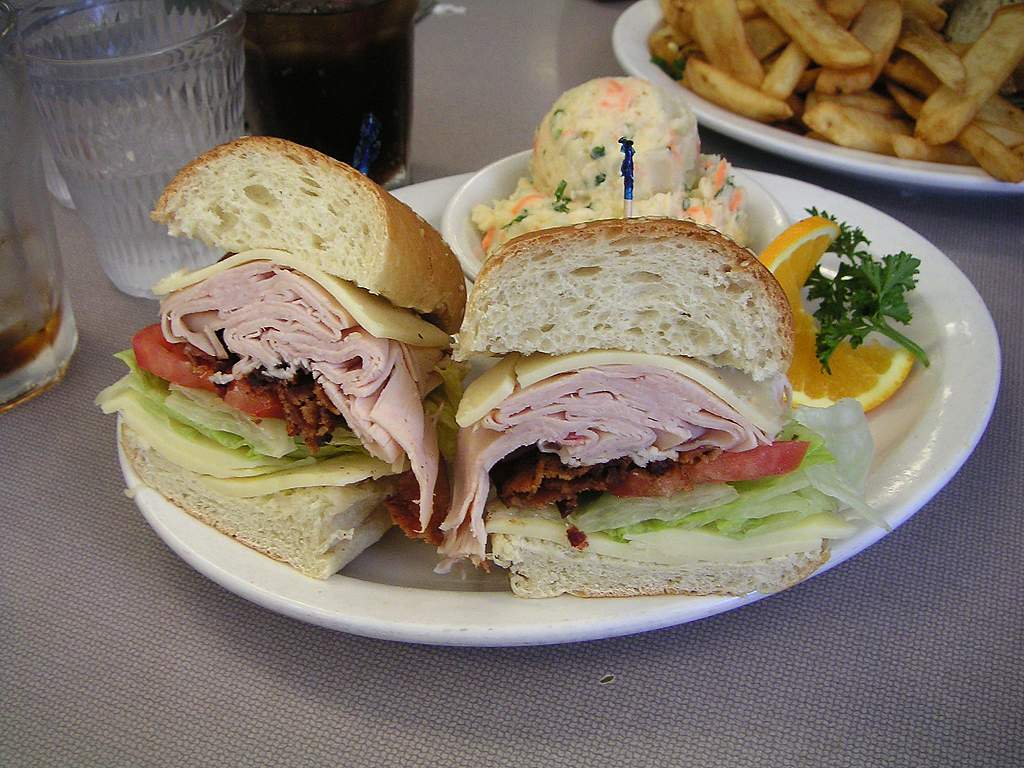
chilly scenes can we reference of villains eating a victim’s sandwich or complaining
about the sound of the air conditioning in the height of a killing? Tarrantino,
the Cohen brothers, and the like know the balance of the horrific and mundane
trick all too well. Who knew they were mirroring the linguistic patterns of
psychopaths so perfectly?
3.
“Psychopaths’
speech contained a higher frequency of disfluencies (‘uh’, ‘um’) indicating that
describing such a powerful, ‘emotional’ event to another person was relatively difficult
for them.”
Yikes! If saying “um” is a sign of psychopathy, I’m in trouble, but it seems
that these disfluencies are at a time when others are talking about emotions. Not only can the “uh’s” help
you craft a psychopath’s language, but may also help you linguistically show the
difficulty one of your characters may have with a topic other than emotions or
murder.
4.
“Psychopaths
used more past tense and less present tense verbs in their narrative,
indicating a greater psychological detachment from the incident, and their
language was less emotionally intense and pleasant.” Interesting!
Linguistically pushing events away from them/their crime by using time. Very
sneaky. And an easy tool for mimicking a psychopath’s dialogue/line of
thinking.
 And
for a final link on how to craft the psychopath’s language, the FBI used the
findings listed above as part of a training on “The Language of Psychopaths” –
an excellent article by the researchers listed above as well as a slew of other
big-name experts in the field.
And
for a final link on how to craft the psychopath’s language, the FBI used the
findings listed above as part of a training on “The Language of Psychopaths” –
an excellent article by the researchers listed above as well as a slew of other
big-name experts in the field.
Subscribe to:
Posts (Atom)