Tuesday, December 31, 2013

What I Hope to See More of in YA in 2014

As we say good-bye to 2013 it is a time of reflection, but also looking forward. Here are some of the things I'd love to see in YA Lit in the upcoming year.

10. More smells. I've always thought that smell was the most under-utilized of the senses, which is a shame because it's been proven to trigger memory the best.

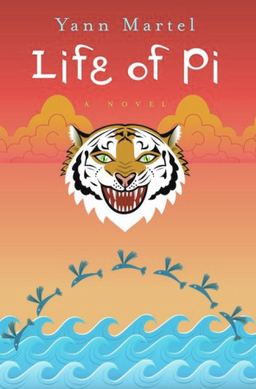
9. Animals. Real animals. Wild animals. Not mythical creatures, or hybrids, or any of that. I'm not even craving a good girl/pet horse story, but something more primitive and raw. If nothing else, the covers could be gorgeous as a lot of pop art has gone to realistic animal pieces.

8. Similes that make me laugh. 

7. Fascinating interiority. Not the simplistic happy/sad/frustrated, etc., but the really odd and nakedly revealing free associations man makes when looking around. I can watch carefully and see most of what you "show" me, but I'm always looking around wondering what's going on inside when someone has a glazed-over look. Books are the only way to poke around there.

6. Diversity. But not diversity for diversity's sake, or anything too culturally charged. I want my students reading books where they find other races, religions, sexual-orientations, perceived disabilities, etc. as their equals/the norm, and not some oddity to put in the box of "other."

5. Wide open spaces. 

4. Layered phrasing. I love subtle uses of puns, even heavily-overused terms like "darkness," "weight," etc. if they are used in a fresh way.
3. Crisp quick details so specific that I know the brand of chocolate bar the character prefers. I especially like food details. Love knowing the very specific dietary habits of the characters I read about. Is that strange? Maybe. But you can learn a lot about a character by what he eats. I once heard a journalist say that all she needed to do was to look in someone's fridge to know who they were. I think it's true.

2. The best piece of life-wisdom the author has gleaned in his/her 20-30-40-50-60-whatever years on this planet thrown haphazardly into the work. Perhaps even by the most foolish character. Maybe as a joke. Shakespeare was great at this technique.

1. More writers slowing down and enjoying the ride. When I went to hear Yann Martel speak at The LA Times Festival of Books (btw if you haven't ever gone, you should go) he said that the happiest time of his life was the period when he was poor and struggling and writing Life of Pi. I've heard several established authors talk about the soul-killing work of peddling your published books. If you aren't published yet, it can be a lucky thing to have a room of your own and time to think about words, their sounds, their meanings, and creating worlds with only the rattle of keystrokes as your guide.

Love you all. Thanks for reading in 2013! 

XOXO
--Lauren

Monday, December 23, 2013

Industry Month In Review: Oh What A Year!


Season's Greetings

As we close in on another year, I can't help but reflect on some of the great successes and sad losses. From the release of highly anticipated YA movies like The Hunger Games: Catching Fire end Ender's Game  and novels like Jacqueline Garlick's Lumiere to the recent passing of acclaimed author Ned Vizzini. 2013 was definitely a year of change. 

Here are some of the highlights, check it out!

New Blogs:

Here are two new blogs that are sure to tickle your YA fancy!

Write On Sisters

Hollow City, Ransom RiggsThis blog features a perfect mix of perspectives.  From a television writer to a historian to a teacher and an agent/editor, you're sure to get just the right dose of insightful learnings and entertaining tidbits.  

YA Series Insiders

What's more exciting than having released your first book in 2013?  Releasing the first in a series in 2014! This new blog features authors who all have lead YA series starting in 2014.  Want to be in the know or win fabulous prize packs? This blog has it all. 

New Books:

Speaking of new books, there are simply way too many coming out in 2014 (see YA Series Insiders to name just a few!).  

Epic Reads had done the dirty work for us and highlighted 15 of the most anticipated YA Books to be published in January 2014 alone!

I for one can't wait for Veronica Rossi's Into the Still Blue or Ransom Rigg's Hollow City.

The Fault In Our Stars, John GreenUpcoming New Movies:

2013 has seen its fair share of YA adaptations and 2014 looks to be no different.  Here are four that I know will be on your "Must See Movie" list.  

Divergent, Veronica Roth

The Fault in Our Stars, John Green (which has already garnered some criticism from it's poster tagline).

The Maze Runner, James Dashner's

If I Stay, Gayle Forman

Happy Holidays Everyone!

Friday, December 20, 2013

LIFE, A.D. Blog Hop & Giveaway!

I'm excited to wrap up the year with another amazing new release - Michelle E. Reed's LIFE, A.D!

Synopsis:  In Life, A.D. you have two choices: join the program or face the consequences.

Seventeen-year-old Dez Donnelly crashes headlong into fate on the side of a rural highway, her life ending in a violent collision of steel and screaming brakes. The train that delivers her newly departed soul to the crossroads of the afterlife won’t be carrying her to the sweet hereafter until she accepts her abrupt end and learns to let go of the life she’ll never finish.

Her new reality is conduct manuals, propaganda, and unrelenting staff, all part of a system to ease her transition from life to death, while helping her earn her way out of limbo. Atman City, beautiful and enticing, is an ever-present temptation that is strictly off limits to underage souls. The promise of adventure proves too strong, and beneath the city’s sheen of ethereal majesty, Dez discovers a world teeming with danger.

Welcome to Life, A.D. where being dead doesn’t mean you’re safe, and the only thing harder than getting out of limbo is getting through it.


I'm a sucker for afterlife stories, and this one doesn't disappoint. Reed paints a vivid and unique look at what awaits us when we die, and explores the other side of loss as Dez attempts to come to terms with her too-short life. Dez's limbo is wrought with strict schedules and rules, where young adults not yet ready to let go of life must find a way to reconcile who they are with who they wanted to be, all while avoiding the temptations of nearby Atman City. In life, Dez was a straight A student and star athlete with Ivy league dreams.  But in the afterlife, rules and Dez don't mix, and moving on proves tougher than she ever imagined.

Win a FREE copy via the rafflecopter below or click here!
Add it to Goodreads here
Buy it on Amazon here
Buy it on B&N here
Buy it on Kobo here

ABOUT MICHELLE E. REED:

Michelle E. Reed was born in a small Midwestern town, to which she has returned to raise her own family.
Her imagination and love of literature were fueled by a childhood of late nights, hidden under the covers and reading by flashlight. She is a passionate adoption advocate who lives in Wisconsin with her husband, son, and their yellow lab, Sully.
Connect: Website | Twitter | Facebook | Goodreads

a Rafflecopter giveaway

Wednesday, December 18, 2013

Writing for Multiple Age Groups

As a follow up to my post on age categories and word count guidelines from last week, I thought I'd address a frequently asked writer question: is it possible for an author to write fiction for multiple age groups?

The short answer is: yes. Many authors have published fiction for different age groups. Notable authors who've done this very successfully include James Patterson (adult and young adult), J.K. Rowling (middle grade, young adult, and adult), and Suzanne Collins (middle grade and young adult).

James Patterson YA

JK Rowling adult

Suzanne Collins MG

The long answer is a little more complicated. The best advice I heard from an agent in response to the question was this: start out by focusing on one age group. That is, if you're querying a young adult novel, it's probably best not to mention the picture book, middle grade novel, and adult novel that you are have in progress. The agent is better able to sell multiple books to publishers if the audience is cohesive.

Another factor to consider is that most literary agents tend to specialize in one or two age groups. An agent who is interested in middle grade novels may not be willing to also represent your adult novel, since they may not have the publishing contacts to sell it. So multiple agents might be required if you want to go the multiple-age-group route.

That's not to say that you can't eventually branch out into other age groups after you've made some sales in your first age category. Some authors choose to do this by using a pen name (this causes less confusion for their middle grade fans if they write an adult novel full of sex and violence).


Of course, the advice above may not be true for everyone. I know a lovely gal whose agent sold her first book, a middle grade novel, and then turned right around and sold a picture book she'd written. So as always, there are exceptions to every rule.

Are you interested in writing for more than one age group?

Wednesday, December 11, 2013

Age Categories and Word Count Guidelines for Fiction

Whether you're working on your first novel or have written many, you probably have some idea of the age group you're targeting: adults, babies, or any age in between. But writers are often confused about where precisely their work falls in these categories. They also wonder what length is appropriate for that age range.

Here's a handy cheat sheet of common fiction categories (word count information comes mostly from this helpful Literary Rambles blog post):

Note: In the publishing world, length is determined by word count rather than pages, since the page count will change depending on how your manuscript is formatted.

  • Board Books: Books with thick cardboard pages, intended for babies and young toddlers. Generally under 100 words.
  • Picture Books: Books written for children from ages 3-8. Illustrations are very important to the story (and are often on every page). Generally 400-900 words in length.
    Where the Wild Things Are cover


  • Early Readers: Books designed for children who are beginning to read on their own, or from about ages 6-8. There are only a few sentences on each page, and they usually feature color illustrations. Generally 200 to 3,500 words in length.
    Early readers
  • Chapter Books: Books for independent readers who are a little older, about 7-10. Sentences are a little more complex in these books, and they may have no illustrations at all. Generally 4,000-10,000 words in length.
    Chapter Book


  • Middle Grade: Books for readers from ages 8-12. The word count starts to vary a little more widely here. Generally 25,000-45,000 words in length, but sci-fi or fantasy books that might require more world building might go up to 70,000 words or even higher.
    Middle Grade


  • Young Adult: Books written to appeal to readers over age 12. (Notice there's no upper age given for YA--that's because this genre appeals to a lot of adults, too!) The word count for YA books is generally in the 45,000-70,000 word range, but speculative fiction books may go as high as 100,000 words.
    Young Adult


  • Adult: Books written for the adult market can be all over the map. This Writer's Digest blog post suggests that 80,000-90,000 words is a safe range, but also mentions that books as low as 70,000 or as high as 110,000 will probably be all right. As with Middle Grade and Young Adult books, sci-fi and fantasy novels tend to run a little longer, so acceptable word count for these genres is probably more in the 90,000-125,000 range.
    Adult Books
There are a few categories I didn't touch on above (for example, Hi-Lo books, which are designed to be high interest books for older readers with a lower reading level), but this list covers the age categories you'll probably hear most often.

Check out the linked blog posts above for more information!