I try to always be reading a middle grade or young adult book (since these are the two age groups for which I write). Reading widely in your chosen age group and genre is essential for anyone who wants to be a published author. This way, you can see how successful (published) writers tackle subjects and get examples of writing that resonates with the target audience.
As I mentioned in my last post, though, my family just completed a cross-country move. During the weeks of disruption, I really needed some comfort reading—something I didn't have to think about or analyze—so I turned to several of my favorite dog-eared women's fiction novels.
It was surprisingly enlightening. Even though these books were obviously written for adults, with plenty of bad language, violence, and even a sex scene or two, they shared many elements with my kidlit favorites. The writing is spare, without any unnecessary words or overly flowery descriptions. Witty asides are just as funny for kids as for adults. And my favorite characters were fully developed, with believable motivations and understandable reactions.
I'm going back to my writing with a renewed sense of what's important. Although I'm going to be switching back to MG/YA for a while, I'll try to read outside my usual age groups more often. Good writing is good writing, no matter where it's shelved in the bookstore.

Showing posts with label age categories. Show all posts
Showing posts with label age categories. Show all posts
Monday, May 1, 2017

Wednesday, December 18, 2013
Writing for Multiple Age Groups
As a follow up to my post on age categories and word count guidelines from last week, I thought I'd address a frequently asked writer question: is it possible for an author to write fiction for multiple age groups?
The short answer is: yes. Many authors have published fiction for different age groups. Notable authors who've done this very successfully include James Patterson (adult and young adult), J.K. Rowling (middle grade, young adult, and adult), and Suzanne Collins (middle grade and young adult).


The long answer is a little more complicated. The best advice I heard from an agent in response to the question was this: start out by focusing on one age group. That is, if you're querying a young adult novel, it's probably best not to mention the picture book, middle grade novel, and adult novel that you are have in progress. The agent is better able to sell multiple books to publishers if the audience is cohesive.
Another factor to consider is that most literary agents tend to specialize in one or two age groups. An agent who is interested in middle grade novels may not be willing to also represent your adult novel, since they may not have the publishing contacts to sell it. So multiple agents might be required if you want to go the multiple-age-group route.
That's not to say that you can't eventually branch out into other age groups after you've made some sales in your first age category. Some authors choose to do this by using a pen name (this causes less confusion for their middle grade fans if they write an adult novel full of sex and violence).

Of course, the advice above may not be true for everyone. I know a lovely gal whose agent sold her first book, a middle grade novel, and then turned right around and sold a picture book she'd written. So as always, there are exceptions to every rule.
Are you interested in writing for more than one age group?
The short answer is: yes. Many authors have published fiction for different age groups. Notable authors who've done this very successfully include James Patterson (adult and young adult), J.K. Rowling (middle grade, young adult, and adult), and Suzanne Collins (middle grade and young adult).
The long answer is a little more complicated. The best advice I heard from an agent in response to the question was this: start out by focusing on one age group. That is, if you're querying a young adult novel, it's probably best not to mention the picture book, middle grade novel, and adult novel that you are have in progress. The agent is better able to sell multiple books to publishers if the audience is cohesive.
Another factor to consider is that most literary agents tend to specialize in one or two age groups. An agent who is interested in middle grade novels may not be willing to also represent your adult novel, since they may not have the publishing contacts to sell it. So multiple agents might be required if you want to go the multiple-age-group route.
That's not to say that you can't eventually branch out into other age groups after you've made some sales in your first age category. Some authors choose to do this by using a pen name (this causes less confusion for their middle grade fans if they write an adult novel full of sex and violence).

Of course, the advice above may not be true for everyone. I know a lovely gal whose agent sold her first book, a middle grade novel, and then turned right around and sold a picture book she'd written. So as always, there are exceptions to every rule.
Are you interested in writing for more than one age group?
Wednesday, December 11, 2013
Age Categories and Word Count Guidelines for Fiction
Whether you're working on your first novel or have written many, you probably have some idea of the age group you're targeting: adults, babies, or any age in between. But writers are often confused about where precisely their work falls in these categories. They also wonder what length is appropriate for that age range.
Here's a handy cheat sheet of common fiction categories (word count information comes mostly from this helpful Literary Rambles blog post):
Note: In the publishing world, length is determined by word count rather than pages, since the page count will change depending on how your manuscript is formatted.
Check out the linked blog posts above for more information!
Here's a handy cheat sheet of common fiction categories (word count information comes mostly from this helpful Literary Rambles blog post):
Note: In the publishing world, length is determined by word count rather than pages, since the page count will change depending on how your manuscript is formatted.
- Board Books: Books with thick cardboard pages, intended for babies and young toddlers. Generally under 100 words.


- Picture Books: Books written for children from ages 3-8. Illustrations are very important to the story (and are often on every page). Generally 400-900 words in length.
_cover.jpg "Where the Wild Things Are cover")
_cover.jpg "Where the Wild Things Are cover")
- Early Readers: Books designed for children who are beginning to read on their own, or from about ages 6-8. There are only a few sentences on each page, and they usually feature color illustrations. Generally 200 to 3,500 words in length.


- Chapter Books: Books for independent readers who are a little older, about 7-10. Sentences are a little more complex in these books, and they may have no illustrations at all. Generally 4,000-10,000 words in length.


- Middle Grade: Books for readers from ages 8-12. The word count starts to vary a little more widely here. Generally 25,000-45,000 words in length, but sci-fi or fantasy books that might require more world building might go up to 70,000 words or even higher.
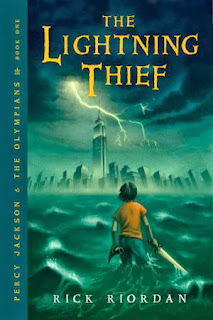

- Young Adult: Books written to appeal to readers over age 12. (Notice there's no upper age given for YA--that's because this genre appeals to a lot of adults, too!) The word count for YA books is generally in the 45,000-70,000 word range, but speculative fiction books may go as high as 100,000 words.


- Adult: Books written for the adult market can be all over the map. This Writer's Digest blog post suggests that 80,000-90,000 words is a safe range, but also mentions that books as low as 70,000 or as high as 110,000 will probably be all right. As with Middle Grade and Young Adult books, sci-fi and fantasy novels tend to run a little longer, so acceptable word count for these genres is probably more in the 90,000-125,000 range.


Check out the linked blog posts above for more information!
Subscribe to:
Posts (Atom)