
Showing posts with label word count. Show all posts
Showing posts with label word count. Show all posts
Tuesday, July 25, 2017
Word Count
I'm still in school so capping writing is important. I don't usually have a word count, but I usually have a page limit. This summer as I write scholarship and college essays, I've encountered my worst limit of all - the word count. Sure, as a writer, I've faced that but before, but some of these essays want no more than 250 words. Ugh! Good news it really has made me focus on my word choices. Thus my tip this month if you tend to be wordy is to write essays with a 250 cap. Once you get used to the pain, it is kind of fun!

Wednesday, May 10, 2017
From Summer to College and Beyond
 Summer is fast approaching now. Vacation time!! Woohoo!
Pools, parties, and popsicles.
Maybe a little light reading and maybe a little writing or at least journaling.

For me, my summer writing will take a different direction this year. It is time to start thinking Common App or the college essay. Time for me to get creative about myself - kinda like author bio. I won't be following same format, but I will be trying to think along those lines.
 So what can I take from author bio to apply to my writing?
Voice of course.
Humor for sure.
Include just the details that apply to the situation.
Word count.
And my own personal motto? Keep it real.
Edit.
Revise.
Repeat.
Wednesday, April 9, 2014
Editing: Cutting Down Your Word Count
"It is perfectly okay to write garbage--as long as you edit brilliantly."
-C.J. Cherryh

During the editing process, I'm going to cut a few subplots, which will help some. But what about the little things that contribute to bloated word counts? They add up faster than you might think.
Here's a list of things to check when you're trying to get your word count down:
1. Redundant phrases, ideas, or thoughts. Example: "He flew forward in his chair." We presumably already know he's sitting in a chair, so the italicized part of the sentence is redundant and could be eliminated.

2. Unnecessary dialogue tags. If it's clear from context who's doing the speaking, you don't need a "he said." It's only two words, but what if you could cut one or two of these from every page? That adds up quickly over a 200-300 page manuscript.
3. Spelling things out for the reader. This goes back to the good old "show, don't tell" adage. If you show a character's fear through his reaction to innocent noises, there's no need to then tell the reader that he's feeling scared. This is an area where most writers can cut ruthlessly.

4. Descriptive words and phrases. Look for adjectives, adverbs, and overlong descriptions of minor characters or settings. Some specific words to watch out for: actually, basically, seemed, just, really. The nice thing is that it's easy to do a word search on modern word processors.
For more strategies on how to cut big chunks of your manuscript's word count, check out these great blog posts:
Lighten Up! Cutting Down Your Word Count from Janice Hardy's Fiction University
How to Cut Thousands of Words Without Shedding a Tear from Rachelle Gardner
Four Ways to Cut your Novel's Draft (and Make Your Story Stronger) from Aliventures
Wednesday, December 11, 2013
Age Categories and Word Count Guidelines for Fiction
Whether you're working on your first novel or have written many, you probably have some idea of the age group you're targeting: adults, babies, or any age in between. But writers are often confused about where precisely their work falls in these categories. They also wonder what length is appropriate for that age range.
Here's a handy cheat sheet of common fiction categories (word count information comes mostly from this helpful Literary Rambles blog post):
Note: In the publishing world, length is determined by word count rather than pages, since the page count will change depending on how your manuscript is formatted.
Check out the linked blog posts above for more information!
Here's a handy cheat sheet of common fiction categories (word count information comes mostly from this helpful Literary Rambles blog post):
Note: In the publishing world, length is determined by word count rather than pages, since the page count will change depending on how your manuscript is formatted.
- Board Books: Books with thick cardboard pages, intended for babies and young toddlers. Generally under 100 words.


- Picture Books: Books written for children from ages 3-8. Illustrations are very important to the story (and are often on every page). Generally 400-900 words in length.


- Early Readers: Books designed for children who are beginning to read on their own, or from about ages 6-8. There are only a few sentences on each page, and they usually feature color illustrations. Generally 200 to 3,500 words in length.


- Chapter Books: Books for independent readers who are a little older, about 7-10. Sentences are a little more complex in these books, and they may have no illustrations at all. Generally 4,000-10,000 words in length.


- Middle Grade: Books for readers from ages 8-12. The word count starts to vary a little more widely here. Generally 25,000-45,000 words in length, but sci-fi or fantasy books that might require more world building might go up to 70,000 words or even higher.
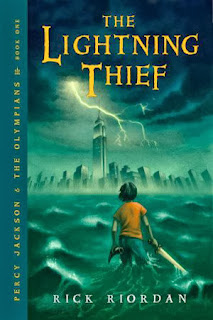

- Young Adult: Books written to appeal to readers over age 12. (Notice there's no upper age given for YA--that's because this genre appeals to a lot of adults, too!) The word count for YA books is generally in the 45,000-70,000 word range, but speculative fiction books may go as high as 100,000 words.


- Adult: Books written for the adult market can be all over the map. This Writer's Digest blog post suggests that 80,000-90,000 words is a safe range, but also mentions that books as low as 70,000 or as high as 110,000 will probably be all right. As with Middle Grade and Young Adult books, sci-fi and fantasy novels tend to run a little longer, so acceptable word count for these genres is probably more in the 90,000-125,000 range.


Check out the linked blog posts above for more information!
Wednesday, January 30, 2013
January NaNo Wrap-up and Tips
As you may recall, I've been doing my own NaNo thing for the month of January. My goal was to write 50,000 words by the end of the month.
As of last night, I'm at 49,181. Barring any ridiculous circumstances that would prevent me from writing only 400 words for the next two days, I think I can safely say I'm going to make my goal!

- 1613 words per day is really not that many words. On average, I'd say it took me one and a half to two hours. My preference was to spread the time out over the course of the day. The writing felt much less difficult/sloggy when I spread the time out over fifteen or twenty minute intervals.
- Stopping when I hit the word count, even if I felt like I could go much longer, was crucial for my forward progress. It was so much easier to start my words the next time, since it wasn't hard to pick up the momentum from the day before. And this helped me avoid burnout or feeling like I needed a break between writing days.

- I'm a planner rather than a pantser, so having an outline before I started was vital. Even with my very detailed outline, there were still places I could have done better—on several days, I lost precious writing time researching or figuring out plot points I should have worked out earlier.
- I got my friends and family on board before I started. This way everyone understood if I said I had to bow out of something because my daily target hadn't been met yet.
- The absolute best motivation for me was entering my word count into my WriteTrack counter every day and watching the graphs climb. There was one hectic day where I only managed to get to 75% of my word target for the day—and I was so upset that my pretty graph looked crappy that I worked really hard to get my numbers up again!

I'm really happy I'm on track to meet the goal I set for myself, but more importantly, writing has become a daily habit for the first time in my life. This is true to the point where I'm even contemplating maintaining my January schedule into February, at least until the first draft of this WIP is done.
If you want to make writing a daily habit too, try your own NaNo! It's easier than you think.
Wednesday, January 2, 2013
How to Do NaNoWriMo Any Month of the Year
Most writers have heard of NaNoWriMo, also known as National Novel Writing Month. Every year, hundreds of thousands of brave souls sign up to write a 50,000 word novel (or 50,000 words of a novel) entirely in the month of November.
This is, of course, a huge time commitment. It translates to 1667 words per day, weekends included. For those who have jobs, families, and other interests, this can be very difficult. There's a lot of frantic key pounding.

Basically, setting high targets for yourself is a way to get the words out there. True, they're probably not the greatest words ever written--in fact, they're probably bordering on crap. (See this previous post for more on why first drafts generally suck and why that's okay.) But NaNo can be an awesome kick in the pants if you're the type of writer who fears the scary blank page/screen.

But sometimes November just doesn't work. You might already be in the middle of writing another novel, or querying, or working on revisions (like I was this year). Or maybe there's something else going on in November that makes it a bad time (relatives coming for the holidays, anyone?).
It's great to have the support of all the other NaNo-ers in November, but it's important to remember that anyone can set their own goal to write 50,000 words in a month without having to base it around someone else's schedule.
This month, I've challenged myself to write the 50,000 words I need to finish the first draft of my new YA manuscript. Since I was already 20,000 words in, this manuscript wouldn't work with the official NaNoWriMo rules--but guess what? This is my own thing, so I make the rules.

And the great thing is that I'm not the only one. I've connected with a group of people on Twitter who are all planning to finish something in January, whether that's a first draft, research, querying, or revisions. Posting goals and checking in is a great way to stay motivated. Come check it out at the hashtag #TheJanPlan if you're interested!
One thing I knew I wanted was some sort of graph to track my progress toward my word count goal. I found this great website (generously offered for free, but he welcomes donations to help defray hosting costs): http://writetrack.davidsgale.com/.
This site lets you set your word count goal first, and then you enter your daily totals to track your progress on a graph like this one:

There's even an option to note certain days you know you won't be able to get much done. The program will then redistribute the words to the other days so you have an accurate target of the daily progress you need to meet your goal.
The plan is to have a completed draft by February 1st, ready to be set aside for a few weeks and then revised. Wish me luck!
Subscribe to:
Posts (Atom)