Showing posts with label Writer's Digest. Show all posts

Monday, June 5, 2017

Which Country Is the Most Literate?

Most writers love reading. So a statistic like "27% of US adults didn't read a single book in the last 12 months" can be really disheartening. This recent Writer's Digest infographic includes this and many more literacy statistics—including the fact that the US is only the 7th most literate country in the world.

What can authors do to improve literacy? Well, the obvious answer is to write a book that everyone wants to read. How many people have you met who said they didn't read after they were done with school, but then they picked up Harry Potter and the Sorcerer's Stone, or Twilight, or The Da Vinci Code, and that got them reading again?

Another answer is to remove any judgement associated with reading "fun books," or "books for kids."   I'll never forget a conversation I had with one of my husband's college friends. He told me he used to love to read, and we bonded over our mutual love of Patricia Wrede's Enchanted Forest Chronicles. Unfortunately, he graduated college with the idea that the only acceptable books were weighty, impressive books of the type he studied in classes. The result was that he'd read only a handful of books in the ten years since.

I find this is incredibly sad. Everyone should be able to read whatever they enjoy, whether that's the Harry Potter series, category romance novels, or the classics (there have to be people out there who actually enjoy the classics, right?). Reading has been proven to improve quality of life. Let's let people read whatever makes them happy.

Wednesday, October 15, 2014

Taking Inspiration from Great First Lines

Did you know that Stephen King spends months, even years writing the first few lines of his novels? (Read the article in The Atlantic here.)

One of the things King says in the interview is this: "But there's one thing I'm sure about. An opening line should invite the reader to begin the story. It should say: Listen. Come in here. You want to know about this."

Just about every literary agent and editor I've ever heard speak agrees that first lines are vitally important in the modern literary world. This article from The Telegraph theorizes that this is largely due to the distractions of technology and the ability to "drop" a book and download another instantly if the first one doesn't grab you immediately.


So how do you make sure the first lines of your manuscript hook your readers? One of the best ways is to study examples of great ones from literature. Lines like "It was a bright cold day in April, and the clocks were striking thirteen." (1984) and "Marley was dead: to begin with." (A Christmas Carol) grab the reader instantly—you want to read on to find out why that would be, or why that would have been said like that. Check out an extensive list of great first lines here on Pub(lishing) Crawl.

If you need help getting your own first lines into shape, here are some online resources that may help:

Monday, October 8, 2012

Writer's Resource: Synopsis Help and Links

According to Writer's Digest, a synopsis "supplies key information about your novel (plot, theme, characterization, setting), while also showing how these coalesce to form the big picture. Quickly tell what your novel is about without making the editor or agent read the novel in its entirety."

It sounds so easy when they say it.

If you think summarizing a 300-page novel while maintaining voice, keeping the writing engaging, and putting in enough information (but not too much!) to see how all the pieces of the plot go together sounds like about as much fun as a root canal, you're not alone.

Oh, and did I mention agents and editors often want the synopsis to be no more than 1-2 pages?

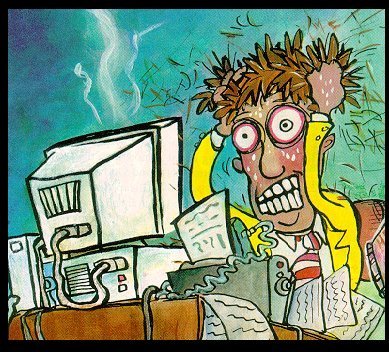
tearing out hair

If you start looking like the dude in the picture at the very thought, read on for a few handy tips and sites that might help make the synopsis-writing process more bearable.

First of all, it's very smart to have two versions of your synopsis, a long one (4-7 pages is safe) and a short one (1-2 pages). In my experience, most agents are busy these days and want the short one, but I have had a few ask for the one with the most detail.

Most advice will tell you to write the long synopsis first and then condense that to get your short one, but I found exactly the opposite worked for me. Once I had the short one together, it was a snap to add details, characters, and plot points to flesh out the long one.

Here is the absolute best site I've ever found for writing a short synopsis: http://www.publishingcrawl.com/2012/04/17/how-to-write-a-1-page-synopsis/. Susan Dennard gives you a worksheet with specific questions and uses Star Wars as an example as she walks you through each step. I cannot recommend this method highly enough. I've now sent this link to a half-dozen writers, and each person has commented on the simplicity and effectiveness of this method.

A few other sites you might find useful:


writing too long

Here's a good resource for trimming a synopsis that's too long (a common problem!):

Good luck with your synopsis, and feel free to ask questions in the comments!