Do you write fantasy or science-fiction? If you do, you'll definitely want to check out this Magical Places Tumblr the next time you're creating settings or fleshing-out anemic ones. There are an unbelievable number of amazing shots. A few story ideas popped into my head just from scrolling through the page!
Here's a screenshot:
I wasn't really sure what Tumblr was prior to stumbling upon this page, so I looked it up. The short explanation is that it's a place for people to set up short blogs (officially called "tumblelogs," although most people seem to just call it "my Tumblr.").
Users can post things directly to their Tumblr, much like Twitter or Facebook, without having to go through another interface. Most Tumblr users appear to favor photographs, which leads to amazing sites like this one.
If you'd like to read more about Tumblr, there's a good explanation here: What the Hell is Tumblr?. You can also go to Tumblr.com to set up your own.
Monday, October 15, 2012
Wednesday, October 10, 2012
The Genius of TED
I happen to be in love with TED (the lecture series not the profane stuffed bear). Especially when I'm procrastinating. Especially when I get to hear talks about how to whip up a great story, or what it's like to be a teenager. Here are a few of my faves for the next time you want to be inspired:
Pixar genius Andrew Stanton talking about the clues to a great story: http://www.ted.com/talks/andrew_stanton_the_clues_to_a_great_story.html
Neuroscientist Sarah-Jayne Blakemore on the development of the teenage brain:
http://www.ted.com/talks/sarah_jayne_blakemore_the_mysterious_workings_of_the_adolescent_brain.html
THE Amy Tan talks about where creativity resides by saying brilliant things like "We all hate moral ambiguity in some sense, and yet it is absolutely necessary. In writing a story, it is the place where I begin." : http://www.ted.com/talks/amy_tan_on_creativity.html?quote=287
Pixar genius Andrew Stanton talking about the clues to a great story: http://www.ted.com/talks/andrew_stanton_the_clues_to_a_great_story.html
Neuroscientist Sarah-Jayne Blakemore on the development of the teenage brain:
http://www.ted.com/talks/sarah_jayne_blakemore_the_mysterious_workings_of_the_adolescent_brain.html
THE Amy Tan talks about where creativity resides by saying brilliant things like "We all hate moral ambiguity in some sense, and yet it is absolutely necessary. In writing a story, it is the place where I begin." : http://www.ted.com/talks/amy_tan_on_creativity.html?quote=287
| Wish I could've seen all of those live, but did get to attend a local TED x event. If there's one near you, you may want to check it out! |
Monday, October 8, 2012
Writer's Resource: Synopsis Help and Links
According to Writer's Digest, a synopsis "supplies key information about your novel (plot, theme, characterization, setting), while also showing how these coalesce to form the big picture. Quickly tell what your novel is about without making the editor or agent read the novel in its entirety."
It sounds so easy when they say it.
If you think summarizing a 300-page novel while maintaining voice, keeping the writing engaging, and putting in enough information (but not too much!) to see how all the pieces of the plot go together sounds like about as much fun as a root canal, you're not alone.
Oh, and did I mention agents and editors often want the synopsis to be no more than 1-2 pages?
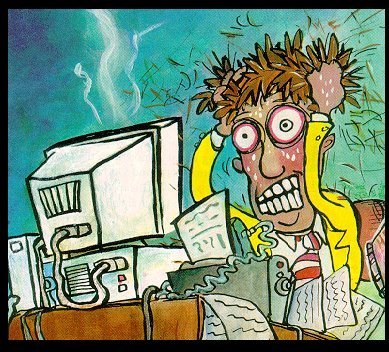
If you start looking like the dude in the picture at the very thought, read on for a few handy tips and sites that might help make the synopsis-writing process more bearable.
First of all, it's very smart to have two versions of your synopsis, a long one (4-7 pages is safe) and a short one (1-2 pages). In my experience, most agents are busy these days and want the short one, but I have had a few ask for the one with the most detail.
Most advice will tell you to write the long synopsis first and then condense that to get your short one, but I found exactly the opposite worked for me. Once I had the short one together, it was a snap to add details, characters, and plot points to flesh out the long one.
Here is the absolute best site I've ever found for writing a short synopsis: http://www.publishingcrawl.com/2012/04/17/how-to-write-a-1-page-synopsis/. Susan Dennard gives you a worksheet with specific questions and uses Star Wars as an example as she walks you through each step. I cannot recommend this method highly enough. I've now sent this link to a half-dozen writers, and each person has commented on the simplicity and effectiveness of this method.
A few other sites you might find useful:
Here's a good resource for trimming a synopsis that's too long (a common problem!):
Good luck with your synopsis, and feel free to ask questions in the comments!
Wednesday, October 3, 2012
Why I Read Banned Books to Try to be More Christ-Like
WARNING: This is the rant of ONE religious blog member who can’t resist giving her own slant on the need for a Banned Books Week on the blog. Enter at your own risk. I promise this is probably the only religious post I'll do.
As someone known for being book-obsessed, many of my
religious friends often come to me regularly to ask what they should read/have
their kids read. Most of the time, they’ll include a qualifier, though. They
don’t want to read anything that isn’t “clean” and “uplifting” and then rattle
off a list of offending titles that do not fit the bill.
Hmmmmm. That list of offending titles often reads an awful
lot like the list of books I would’ve just recommended.
And so the dilemma.
What to say? While this isn’t usually what I do say, it’s what I always want to
say: “Depends. If you want to be more Christian, I’d start with one of the ones
on that list. I have an extra copy of Catcher
in the Rye, if you'd like.” Smile.
The reasoning: Now, I’m definitely not saying that every book that isn’t
“clean” is worth reading. Personally, I don’t see any value in wasting my time
to read porn, bad-writing, and all shades of gray, and the like, but the
classics? Works of tremendous literary merit that show the depth of the human
experience? Works that in an attempt to show us humanity at its most honest may
include things like rape, violence, sex, swearing, etc.? How is that not worth reading???
I think this point was driven home best for me one lazy
summer afternoon at Book Passage bookshop. I’d just listened to the brilliant
Isabelle Allende and had asked her to sign my copy of The House of the Spirits,
a book I teach. She remarked that many schools had banned it and chuckled, and
then went on to talk about (or at least this is how I remember it) how
interesting she thought it was that so many parents fought so desperately to
stop their children from seeing what it would’ve been like to have been born in
other, less lucky, more violent circumstances.
I got to thinking. The book is a magical re-telling influenced
by the stories of her family. Her cousin once-removed, Salvador Allende, was
violently overthrown and she includes all of the fallout that brings as well as
other family traumas that her own family may very well have experienced. And
yet, her life, the one she may have experienced as an innocent child, was too
dirty for the other kids to see. Wouldn’t want them sullied too. Wouldn’t dare
to want the clean kids to do something terrible like learn to empathize at a
time (teen years) when a brain is literally wired to develop empathy. Nope. Let
those unlucky kids suffer alone. Poor suckers. Totally what Jesus embodied.
Or not.
While there are many aspects of the Christ-figure I love
like the model for re-birth, strength-in-kindness, etc., the one I love most is
that Christ is the perfect model of empathy. In the Bible He suffers everyone’s
sins for redemption, and in doing so, it makes Him uniquely qualified to give comfort
at man’s lowest moments, having literally experiencing the same pain. And one of the most unbearable aspects of suffering is
the loneliness that often accompanies it. Isn’t it?
So I think that I would like to do a little of that, too, but
unfortunately, I haven’t experienced everything. There are a lot of dark places
my loved ones have spent time in that I can’t even fathom. Or at least not
without the help of books. And sure, I don’t need to go there. I can stay peaceful and clean. But that’s not what Jesus did. Jesus chose to experience all
of the pains this world can heap on man. And I think He wanted me to follow
suit, and so he gave us books. Great and powerful sometimes un-clean books.
Books that even talk about rape (just ask David’s daughter Tamar)
or violence (Abel might be able to comment on this one), sex (oh David!) and
the like. BTW my examples aren’t even past 2 Samuel in one of the greatest
banned books ever written.
And it gets even better because talented people keep writing books that honestly portray and grapple with these issues in modern ways that make them applicable to today's special ills. How awesome it that!
So, yeah. I’ll admit it. I'm going to keep reading/recommending banned
books from The Bible to Catcher in the Rye to The House of the Spirits to To Kill a Mockingbird, to I Know Why the Caged Bird Sings, to Speak and more and more, and in each
uncomfortable moment I’m hoping to develop more of one of Jesus's best traits: to be the kind of person who is prepared for the next time one of
students or friends needs to feel just a little less alone.
Monday, October 1, 2012
Industry Month in Review: Money, Money, Money!
We all aspire to be amazing writers, expressing ourselves through beautiful words and lyrical prose. We pride ourselves on our ability to remain pure to our calling and write without boundaries. Even so, we have to eat and so do our agents and publishers. Hence, that's why publishing is a business and writing with the goal of being published can sometimes feel like a daunting task and a bit like swimming with the sharks.
This video from dontgetscrewedover.com serves more to poke fun at the world of freelance in general and directs you to a website that provides legal tips for those who can't afford high power lawyers. Still, it resonates with many writers. If anything, it reminds us not to assume we know exactly what agents and publishers are looking for and to make sure we always do our due diligence (when we finally get that offer!) regardless of how much it's worth.
![]() |
| Hernando Guanlao in front of his home turned free library |
But enough about money. Sometimes, the best things in life are free. Hernando Guanlao may be a former accountant, but he's doing more to spur on the love of reading than most of us do writing. Guanlao lives in Makati City, Philippines and he has turned his house into a free public library where there are no rules. Kids and adults alike can take what they please for as long as they want. With over 30% of the country living under the poverty line, access to a free library like Guanlao's can mean all the difference in the world.
Just like the circle of life, from the mind of a writer to the press of a publisher to the hands of an excited reader, a book also has it's time and place. Some have found their way into the Jardin de la Connaissance, a garden of decaying books in Quebec. Established in June 2010, the walls of books are now sprouting moss and mushrooms and Dezeen Magazine notes: slowly rotting to become part of the forest.
![]() |
| Jardin de la Connaissance |
Subscribe to:
Posts (Atom)