Showing posts with label Villain of the Month. Show all posts

Sunday, September 28, 2014

Villain of the Month: (Seeming) Perfection


In working through revisions on a piece with a seemingly (from the outside) "perfect" (aka unlikable) character, I've spent a great deal of time considering how beautiful and necessary imperfections are. It's a funny thing, too, since I teach at a high school where so many of my students are desperate to be perfect. I've spent the past decade watching them starve themselves to the point of near-organ failure, go long stretches without sleeping more than five hours a night, wake up at three in the morning to train for sports, do extra-credit even with an A+ in my class, beg for plastic surgery for Christmas, and so on and so forth. If they were killing themselves because they really wanted to achieve a goal, I'd smile, but most of the time it isn't for that. When asked, they often respond that anything that isn't perfect is failure, and it breaks my heart.

When at the Metropolitan Museum of Art this summer, I spent a long time admiring the impressionists for the beauty of their messy brushstrokes, and I wanted to put together a short list of "messy brushstrokes"(imperfections) of some of my favorite characters in literature (and life) that led to strikingly beautiful characters. I'm also hoping some of you will add others.

* Augustus's mom in TFIOS with her love of pillows with "encouragements"
* Scout in To Kill a Mockingbird's unconventional-at-the-time tomboyishness
* Gatsby's desperation to re-create a moment from his past that may never have been much of a moment at all
* Barbara Streisand's trademark beautiful nose
* Barbara Walters's lisp
* Forrest Gump's slower approach to life
* Bill Gates's nerdiness
* Katniss Everdeen's cool demeanor
* Harry Potter's scar
* My mom's tendency to pay for food at drive-thrus and then drive off without said food

What are you favorites?

Monday, July 14, 2014

Villain of the Month: A Character Development Worksheet for Writing Villains


While generic character templates are nice, here is one specifically designed to help you get to know your villain better in 12 easy steps.


1. Character's name:_______________________ Why? Connotation? Symbolism of that name? Does your character have a name we learn right away or is he/she defined by title only when first introduced? Lack of a name (title only) is dehumanizing.

2. Is your villain a sociopath? Does he/she feel remorse when he/she hurts others? If a sociopath, how has that affected him/her in the past? What lessons has he/she learned from childhood on to help him/her cope in a world that feels more? What incidents made him/her learn those lessons? 

3. If your villain is not a sociopath, why is he/she a villain? Bitterness? Misguided idealism? Pride? Love of money/power? Specific weakness? Was there a single inciting incident or was the character led to villainy through a series of smaller choices? What were the choices/incident(s)?

4. Who is your villain's role model? Why? When did he/she discover this figure? What is it about the figure he/she so admires?

5. Who in the world does your role model care about the most besides him/herself? What is the bond between these two figures?

6. What could turn your character good? If x happened, things would be different... What is x, and why would that change things?

7. What is most admirable about your villain? 

8. What is most despicable about your villain?

9. What song was playing on the radio when your villain had his/her first kiss? Who was it with? What happened?

10. What secret quirks does your villain have that he/she definitely does not want people to know about, even though they are not particularly villainous.

11. What brand of jeans does your villain wear?

12. If on death row, what would be your villain's last meal order? Last words?

Bonus question (if you dare): In what ways is your villain most like you? Why do you think you chose that attribute of yourself to give to a villain?

Wednesday, May 7, 2014

Villain of the Month: Poor Grammar (and how to fix it)

While not a traditional villain, grammatical errors are often haunting. So...today's post is dedicated to eradicating them.

There is a new-ish website I've been using with my classes that has been working well. While designed for teachers, I recommend that anyone who wants to brush up his/her grammar go to noredink.com and play around. You're given practice questions, immediate feedback, and tutorials for each question you answer. The best part? It's free.

You'll thank me for it later when you no longer fear the scary semi-colon goblins. :)

Monday, April 7, 2014

Villain of the Month: Elsa?


Last week I had a slumber party with my little nieces and finally saw the much-discussed Disney flick, Frozen. Instantly, I was compelled to read up on the screenwriter and original story. Apparently (according the very reliable Wikipedia) Disney had been unsuccessfully trying to find a way to work the Hans Christian Anderson fairy tale The Snow Queen into a film, but the Snow Queen was a villain, and they were having a tough time humanizing her. 


Jennifer Lee
Enter Jennifer Lee. The talented co-writer on Wreck It Ralph had popped onto the Disney writing scene after going back to school (Columbia) when she was 30. After working on the Frozen script, she was moved up to a director credit, the first female director of an animated film at a major house. Under her hand, the powerful female "villain" became both not-so-villainous, and not-so-desperate for a man to take care of her (a much-mocked motif in earlier Disney films).

I think it's worthwhile to take a minute to appreciate the strength of the story behind the story here. 

Kudos (and thank you) to Jennifer Lee for taking the powerful-woman-is-villain cliche and turning it into a powerful-woman-is-hero ideal for kids today. 

And a lesson for all my lovely writer friends out there, by examining the villains of our society we expose the things we fear. Some of those cliche villains/fears are dark and horrible and need to remain the things we fear, but as writers, we have the opportunity to explore what it is actually most corrosive to our society. We have the opportunity to turn the cliche villains of oppression/voicelessness/etc. into omens of hope. And maybe I'm overstepping here, but as writers, I don't think it's just our opportunity, but our moral obligation.

Thanks again, Jennifer Lee.

If you have the time, I highly recommend reading some of her interviews. Fascinating person. From Pop Sugar:, with her co-director on Den of Geek, and if you want to watch CBS's take, here it is.

And I know I'm late to the party on this one so I'd love to hear all of your thoughts as well.

Monday, February 3, 2014

Villain of the Month: Captain Hook


While normally I would ramble on and on about what elements make Captain Hook such a great villain, this time I can't figure out a way better to say it than Elizabeth Holmes already has in her fantastic poem The Fathers. Do yourself a favor and click on the link to read for yourself. Oh, and Happy Monday!!!

Monday, January 6, 2014

Villain of the Month: Blue Monday!!!


From Dostoevsky's oppressively hot St. Petersburg in Crime and Punishment to Shakespeare's stormy Scotland in Macbeth, great writers have often heightened the tension in a work by understanding the way weather/seasons affect the characters. If we consider villainous weather and seasons, then today is officially the most villainous day of the year. It even has its own name...Blue Monday. Sounds like a great YA novel title to me. SO if you're feeling a little glum today, remember the power setting has on you; your characters feel the weight of their settings at least as much. 

To read more about Blue Monday, read this 

Tuesday, December 3, 2013

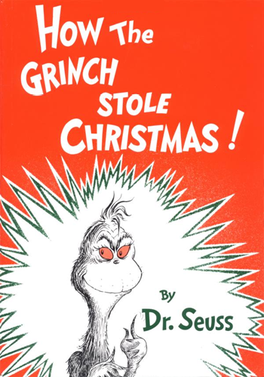
Villain of the Month: The Grinch


Five Reasons Why the Grinch is Such a Delightfully Sympathetic Villain

5. He's green. Christmas Green. Green with envy.

4. Let's face it, the Whos down in Who-ville are annoying. They're always singing. Might as well have called the town Karaoke-ville. Those bug-eyed stage hounds  could use a good shaking up.

3. He's not really that evil. He didn't kill anyone, didn't maim them, didn't even write cruel epithets about their singing on the walls. He just took their Christmas away. He let them get a glimpse of his Christmas-free life for a minute. One might call that a kind and constructive lesson to help them develop empathy. And beyond that, without him, the Whos may never have realized that they didn't need stuff as long as they had each other. Really, he might've been doing them a favor.

2. He's alone at the holidays, but is forced to hear the aforementioned non-stop singing. Nobody likes that feeling. There are even songs written about how annoying it is to watch everyone else happy while you're by yourself like this one

1. He changes! How can we not love a good dynamic character, especially one whose heart grows three sizes in one day. Makes us believe that even the most hardened of society can be good, too. At least those who villains-out-of-envy/discouragement, and not sociopaths. Makes us believe that we can change too and all it takes is a chance encounter with a small child.


Sunday, November 3, 2013

Villain of the Month: D.C. Comics and the Claim that "Heroes Are Lame"

Comic Con 2012. Jabba the Hut: NOT a hero.

On the D.C. Comics website there is a post by Kevin Mahadeo entitled "5.2 Reasons Bad Guys are Cooler Than Good Guys." Since I do have a bit of an obsession with character villainy, I had to check it out. While a simple list post, I must admit I was bugged by the first point: "1. Heroes are lame." 

Really? So that's why we've seen such a non-stop tidal wave of superhero movies/ culture post-9/11??? FYI I live in San Diego, and went to Comic Con pre-2001 when it was mostly just a handful of geeks in spandex. Huh. And now San Diegans need illuminated traffic directives during Comic Con because heroes are lame??? Or was the post just written now because we're starting to feel safer, because people have forgotten the dull ache of what it was like to crave superheroes? I was mulling over all of these when I got to the final line "Plus, they're always so predictable. They'll strive to the do the right thing and save the day and help people. You know who isn't predictable? The Joker. Who knows what that guy will do? One minute he's standing right next to you laughing at what you're writing and the next he could stab you in the face" 

Okay. Okay...so maybe Mahadeo has a point; I don't worry that any of the heroes I know will stab me in the face. Maybe heroes aren't complex enough to be anything more than boring.

Maybe the traditional model of hero as predictable isn't working for us anymore. Maybe we need to let our relatable, good, trusted, characters, the ones with whom we identify, shock us a little more. Allow them to embrace their darker natures. Even if those darker sides scare us when they aren't tidily placed in the "villain" category. The success of Gone Girl with its foray into the darkness of an initially-likable character certainly shows American readers will eat it up and beg for more.

Or maybe the whole "heroes are lame because they are predictable" argument just plain sucks. 

While I know that great writing requires that our characters surprise us with their complex blends of good and evil, I feel as though I live in a world of predictable heroes who are far more complex than anyone gives them credit for. 

I'm a teacher. 

And I'm a teacher at a public school where many of my colleagues have highly competitive CVs (degrees from Princeton, UC Berkeley, Harvey Mudd, UCLA, etc., one colleague even left a very successful company he'd founded to teach). Every day I'm surrounded by a pack of these men and women who eschew the monetary rewards they might've earned and will always "strive to do the right thing and save the day and help people." 

And the more I get to know my colleagues the more I find the "predictable" heroes far more fascinating than any villain.

We live in a world where the easiest path is one of basic self-centered living, as Mahalo points out, "Clark Kent would have to work for a year to make the kind of money that the Rogues earn for one heist. Just saying." and as I learned from reading The Dictator's Handbook the best way to be a "successful" dictator is to always do what will be the best for you, it seems to me that those motivations are the most dull/predictable because they are the most infantile  responses.

Why be a predictable metronome of goodness when it goes against all basic self-interest, even coolness? Now that's interesting. Complex. Not predictable.

And I believe that teasing out the answer to that question is what makes the writing of a hero great, but (and this is a very big but) can't be limited to the origin story alone. 

What makes a hero good initially and what makes him/her slosh through the myriad small/large battles of life and stick with it are often two, or three, or four, or countless very different stories.  If I've learned anything teaching beside a pack of heroes for the past decade, even the motivations are complex and ever-changing arrangements and, based on my experience, is far less predictable than one might expect.

And I believe that this is the key to writing a good hero. Your reader might not get the rush of constantly being at risk of getting "stabbed in the face," but maybe there's a different kind of rush in pulling back the curtain to see that ever-changing sea of motivation behind what makes a man "super."


Monday, September 9, 2013

Villain of the Month: Cruella de Vil

The Cruella pictured here is only an actor. In real life she would never harm a puppy; IRL she's the anti-Cruella, in case you were wondering. :) 

Yes. She's terrifying, especially to pet-lovers everywhere, but why? This week's villain is Cruella de Vil and here are the top six reasons why she's so darn scary...

6. Her own theme song. Normally I would find that awesome, but here it ups the fear factor. Harder to emulate in writing form (perhaps try the repetition of a melodic phrase?), but worth mentioning nonetheless.

5. The name. So much potential in a name. Cruel + Devil = Cruella De Vil

4. Blinding obsession with materialism. I mean, really, I understand a need to look fabulous, but at what cost? At what cost????

3. Her symbolic need to live in black and white. She doesn't have metaphorical color in her life. No appreciating sunsets or love of sharing chocolate with a good friend. Her life is even visually stark.

2. No human connections. She doesn't have anyone to keep her in check; there is no one she loves more than herself, or much, really, at all. She's void of human warmth.

1. Because even though she has everything outside, inside life sucks for her so she takes it out on the defenseless. The adorable snuggly cuddly little defenseless puppies. Puppies. That's cold, man.

Monday, July 1, 2013

Villain of the Month: Society

Edward Snowden leaked secret files about surveillance systems used by US intelligence (Guardian)
Image of Snowden from article linked below
 Sales of 1984, George Orwell's classic dystopian work, soared recently when Edward Snowden outed himself as the source who revealed that the U.S. government was collecting the metadata on all of its citizens. With such an evolution of technology in the past decade forcing "big brother" questions into the collective conscious of all of us, it's no wonder that dystopian novels have been front and center of the YA world for years now, and that Snowden's reveal has given him a cult-hero status amongst many Americans. 

So...while we've been hearing for a few seasons that publishers aren't looking for dystopian anymore, I can't imagine that they wouldn't start snatching up a few more now to be paired with all of the inevitable Snowden bios and "ripped from the headlines" stories and I think it just might be the time to take that maligned dystopian you have out of the drawer and start querying it again. This has also given me the opportunity to start deconstructing the key elements of society-as-villain in a dystopian novel.

* Government names dehumanize: Aside from a  singular key leader who may be hyper-humanized with a very specific name, usually the naming is vague. Numbers or titles are often popular, as are familial relations (brother, father, etc.) in order to strip away individuality/humanity though the familial titles do manage to maintain more warmth. It is always easier to hate a nameless thing.

* Protagonist names are often very humanizing: As we are meant to be sympathetic with the protagonist, the protagonist often has a very meaningful name. Often he/she is named after a relative, something beautiful in nature, or is simply unique (but often familiar sounding nonetheless).  

* Clinical terminology is dehumanizing, but also appealing: All forms of distancing language are in high use in a dystopian as at the core of a dystopian work is usually a deep-seated desire for life to be more clean and predictable than it is.

* Society is not a singular entity: With shared responsibility comes shared blame and it can be infuriating to not have a singular person on which to lay said blame. The lack of singular enemy enhances a sense of powerlessness and "raises the stakes". Often in a novel a singular entity will be given blame by the end. In real life a few singular persons are "thrown to the wolves" to receive the punishment for the collective entity. 

* Passive sentence construction/ overuse of "to be" verbs creates a sense of powerlessness: These enhance the clinical nature of the work and are highly distancing from the reader. Great dystopian writers often jar us by contrasting the cold distance of passive voice with the vital alive-ness of a protagonist who thinks and speaks in active verbs.

* The core desire of the society is often good, or at least began that way: While some dystopian societies have their starting point with a con artist who never intended good (though his rhetoric was almost certainly appealing to the good in his society), most were able to come into being by reaching to the citizens' sense of a greater good. Often the pattern is that men of the society gave over freedom in order to have a cleaner/safer/longer life, and then paid the consequences when society felt the old dictum "power corrupts, and absolute power corrupts absolutely."


Monday, April 29, 2013

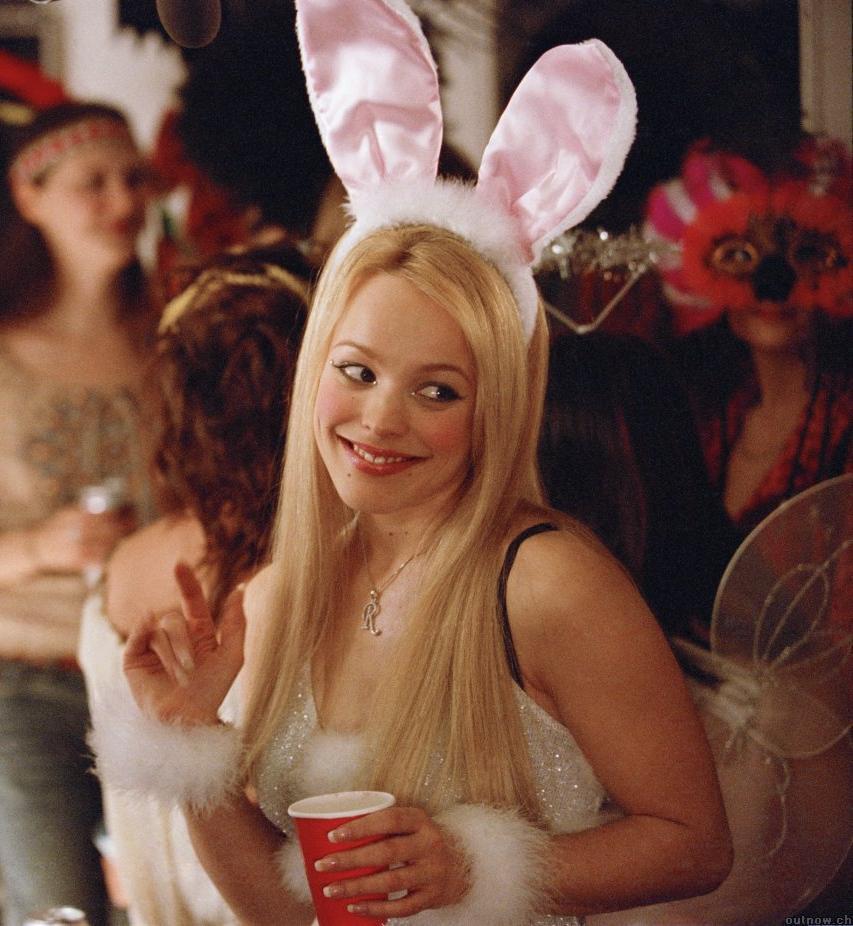
Villain of the Month: Regina George


Though it may have come out in 2004 (has it really been that close to a decade already???), Mean Girls is still a staple film for the high-school set. In fact, I hear it quoted more than any other movie by my teenagers. I will contend, that much of its enduring popularity is due to its fantastically fabulous and equally brutal villain: Regina George.

Here are my TOP TEN reasons why I think Regina George makes such a fantastic villain:

10. She looks angelic with those long flowing locks and rosebud lips.
9.  Her compliments are vague and served with a smile.
8. Her cruel assessments of the receiver of the compliment the minute she turns her back are equally specific and brutal. And still served with a smile. 
7. She has stolen her parents' bedroom (such a small detail to convey such dominance. genius.).
6. She can and does date the hottest guys in school. (Even if she has to lie, cheat, and steal to do it.)
5. Her car. Her house. Her waistline.
4. She falls. When faced with a rival, she actually stumbles thereby gaining our sympathy. How can one fully demonize a beautiful girl in a back-brace who has been secretly fed weight-gainer by a "friend"?
3. She fights back. At a time when it is incredibly difficult to navigate girl-world, she doesn't let others determine her status -- no matter how far she has fallen.
2. She's funny. Cruel-funny, but funny.
1. She does what so many great lust-worth villains do: she fulfills in the reader the hidden desire to say what one wants to say regardless of the cost. And is often rewarded for it. Such a silly lot of us: to crave/desire to be the ones we despise the most.

She's such a great villain, in fact, that "Regina George" even has her own Twitter account with almost half a million followers. Check it out any time you want to get inspired by/inside the head of the original mean girl: https://twitter.com/ItsReginaG (Twitter handle: "ItsReginaG"). You're welcome.

Why do you think she makes such a great villain?

Monday, March 25, 2013

Villain of the Month: Cain


In considering classic villains, it only seems appropriate to look back to the first human villain of the Judeo-Christian tradition on which so much of western literature is based. Cain (Qayin). The slayer of Abel (Hevel). 

While there are many additional sources and resources (who hasn’t written about this tale that comprises only eight verses of the KJV Bible? Certainly not Steinbeck, Baudelaire, Shakespeare, Blake, Dante, or so so many others), today I’ll stick to the Koren Jerusalem Bible translation of the stories in honor of Passover.

In case you’ve somehow missed the story, a recap: essentially Hevel was a “tiller of sheep” and Qayin was a “tiller of ground” and when Qayin brought his offering of “the fruit of the ground” and Hevel brought his offering of “the firstlings of the flock and of the fat parts thereof” to the Lord, the Lord did not give equal responses. “…the Lord had respect to Hevel and to his offering: but to Qayin and to his offering he had not respect.” The response from Qayin? Then from Lord again? “Qayin was very angry, and his face fell. And the Lord said to Qayin, why art thou angry? And why art thou crestfallen? If thou doest well, shalt thou not be accepted? And if thou doest not well, sin crouches at the door, and to thee shall be his desire. Yet thou mayest rule over him.” Interesting exchange. So what does Qayin do? “And Qayin talked with Hevel, his brother…” Let me repeat that line. 

“And Qayin talked with Hevel, his brother” 

I’m just going to throw this out there, but I think that all great sibling rivalry, or even all great jealousy stories, are stories that flesh out and modernize that conversation between the two brothers. What happened? Aren’t we curious? 

Aren’t we even more curious when immediately after that line (really—there is nothing else) in the same sentence even, “and it came to pass, when they were in the field, that Qayin rose up against Hevel his brother, and slew him.” The end. Murder done. 

Showcasing some serious psychopathic tendencies (see previous posts on sociopaths), when asked where his brother is, Cain utters the classic line “I know not: am I my brother’s keeper?” I can just see an old-time Nancy Grace replaying a clip of that line over and over the way we’ve repeated the refrain over and over for thousands of years. We’ve always been horrified at sociopathic tendencies.

We’ve also always been drawn to them. 

So my Passover challenge to you (if you choose to accept it) is to quickly write out that conversation. What did one brother say to the other? How did Cain approach him? What is a compelling source of Cain's anger? Hints at backstory? What was Abel’s first response? Was he condescending? Entitled? Kind? I have a feeling that it might make for some interesting layering for anyone writing a Jealousy or Sibling Rivalry tale…

PS If you do happen to complete the challenge, I’d love to read anything anyone’s willing to share (either via email to laurenmmonahan@gmail.com or posted in comments, and if you manage to knock my socks off, I just might send you chocolate from a favorite chocolatier.) ☺

PPS Winner of the "Win a Teen Reader Contest" Will be announced tomorrow!!!!!!

Sunday, January 13, 2013

Villain of the Month: Past Tense, "Um," "Because," and a Sandwich? (The Speech Patterns of Villains)


A man's seated with his arms on a table

After reading an admissions essay by James Holmes onScribd.com, I was frustrated that I couldn’t see any real foreshadowing markers to the horrible real-life villain he would become, and began to wonder if there were any markers of villainy in speech. Then I pulled up journal entries and the like from the Columbine murderers compiled by acclaimed journalist Dave Cullen (author of Columbine). The intimate writings are great resources, and well worth a read to pick up on nuance and cadence.

In furthering my research, I hit specificity jackpot.  I found some researchers (Jeffrey T. Hancock, Michael T. Woodworth and Stephen Porter) asking and answering the same linguistic question. What a great tool for making seating charts, navigating blind dates, and –most importantly – crafting the dialogue of a villain! Their analysis was focused on psychopaths and non-psychopaths talking about homicide, but I think that there are trends that may work really well for writing psychopathic characters even when not talking about homicide. Their findings were as follows:

1.      “Psychopaths (relative to their counterparts) included more rational cause and-effect descriptors (e.g., ‘because’, ‘since’).” Such an easy add to writing, and psychologically fascinating because it shifts the blame to the universe or the victim, and away from the villain. In writing a psychopath villain, keeping the mindset of universe-blame might be as valuable as the use of peppering the aftermath of one of his crimes with “because” and since.”


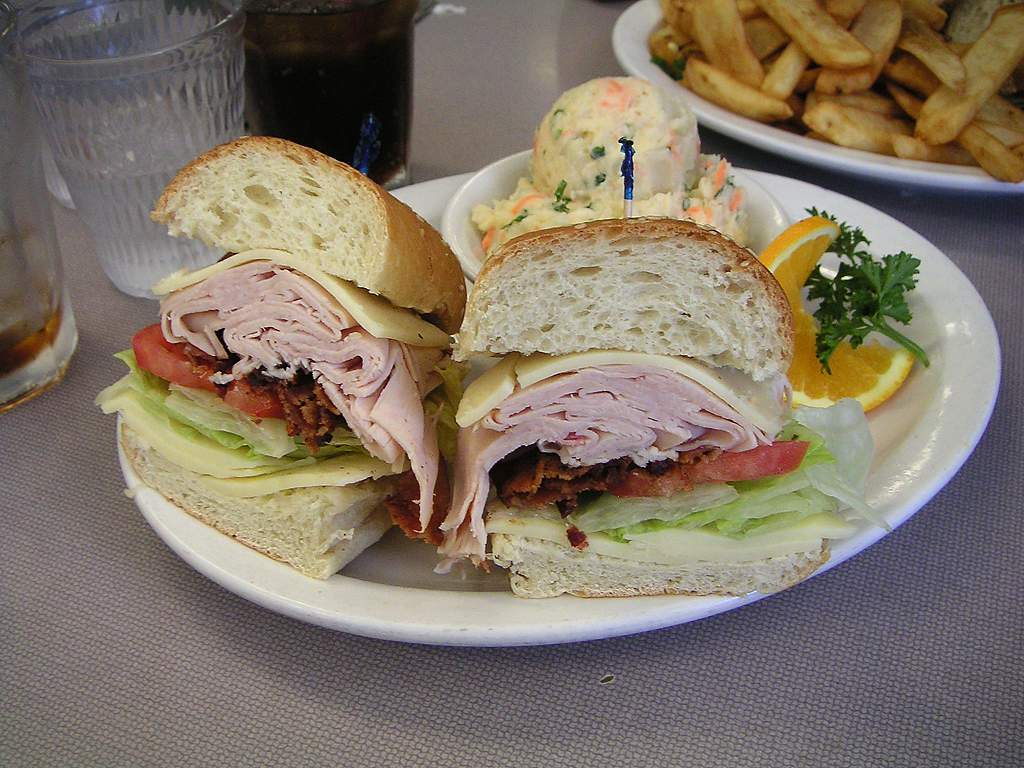
2.      “[Psychopaths] focused on material needs (food, drink, money), and contained fewer references to social needs (family, religion/spirituality).” Ooooh…how many chilly scenes can we reference of villains eating a victim’s sandwich or complaining about the sound of the air conditioning in the height of a killing? Tarrantino, the Cohen brothers, and the like know the balance of the horrific and mundane trick all too well. Who knew they were mirroring the linguistic patterns of psychopaths so perfectly?


3.      “Psychopaths’ speech contained a higher frequency of disfluencies (‘uh’, ‘um’) indicating that describing such a powerful, ‘emotional’ event to another person was relatively difficult for them.” Yikes! If saying “um” is a sign of psychopathy, I’m in trouble, but it seems that these disfluencies are at a time when others are talking about emotions. Not only can the “uh’s” help you craft a psychopath’s language, but may also help you linguistically show the difficulty one of your characters may have with a topic other than emotions or murder.


4.      “Psychopaths used more past tense and less present tense verbs in their narrative, indicating a greater psychological detachment from the incident, and their language was less emotionally intense and pleasant.” Interesting! Linguistically pushing events away from them/their crime by using time. Very sneaky. And an easy tool for mimicking a psychopath’s dialogue/line of thinking.


And for a final link on how to craft the psychopath’s language, the FBI used the findings listed above as part of a training on “The Language of Psychopaths” – an excellent article by the researchers listed above as well as a slew of other big-name experts in the field.

Monday, November 26, 2012

Villain of the Month: The White Witch (Jadis)


And the villain for this month…NanoWriMo! Just kidding (though, at this point, I am finding it a considerable nemesis). This month’s villain is The White Witch (a.k.a Jadis) of C.S. Lewis fame.

In case you’ve never read or seen The Chronicles of Narnia (The Lion, the Witch, and the Wardrobe is #1), the Witch’s presence is first felt when the child protagonists climb through a wardrobe into a tyrannized land that is perpetually stuck in a non-Christmased winter. The land is under the reign of the White Witch who exemplifies the traits outlined in The Dictator’s Handbook (basic premise: economics of a “great” dictator is to always do the thing that will keep you in power regardless of any human cost.)

Here are some of the evil trademarks that have landed her on so many “Top Literary Villain” lists. Note: most of the techniques/tropes are borrowed from classic texts and made fresh for Lewis’s day.
  • ·      Perpetual winter. What a use of setting as characterization! And talk about power; this chick has power over even the elements. We’ve seen this power before in mythology (Persephone is kept in the underworld half the year while the rest of us suffer through sun-free days because her momma misses her), and winterizing as punishment is popular with good reason. If winter represents the dark times in our lives (great for growing humans and plants), then being trapped in perpetual winter is more than dangerous. It leaves us void of hope, and brings to mind societies trapped under oppressive regimes whose greatest indignity is being robbed of hope for a “sunny day.”
Writing Takeaway: If you want to make your audience hate you, tyrannize them in only “winter” (At SCBWI NYC last year, Chris Crutcher claims that he always strives to go as deeply funny as he goes deeply sad).

  •      Turning enemies to stone. Hmmm… sounds a bit like Medusa. Or to combine winter with this, Dante’s Inferno. Dante believed that the worst punishment was to be frozen at the center of hell. To be unable to move forward. To be able to see, but not react. Not move. What evil.
Writing Takeaway: Keep your plot moving so that you don’t turn your readers to stone.

  •  Network of spies. There is no privacy; even the trees are spies (and C.S. Lewis didn’t even have articles like this for inspiration) 

  •       Beautiful façade. She’s beautiful. Taller than most. And inviting. And gives poisoned candy to children. In fact, she is so beautiful, rich, and powerful that she becomes paranoid/terrified that life as she knows it will be taken away (ironic that she is so scared she wants to force that kind of growth-punishing stagnation on herself) that she is willing to destroy children. Sounds like pretty much every dictatorship I’ve ever read about.


That said, happy winter, everybody (literally and metaphorically)! Feel free to enjoy the snow, storms, mittens, Chuao/La Maison/Marie Belle/Chocolate Springs etc. hot cocoa, and cozy fires because the summer is coming. The White Witch is not here; there will be spring again.  :)

My favorite way to warm up from the literal & metaphorical cold.
(La Maison NYC= $8 of happiness!)