Monday, March 10, 2014

YA Book Pick: Room

Once a month, we choose an outstanding YA book to review. We want to spotlight books of interest to aspiring writers, as well as highlight some of our favorite books and authors!
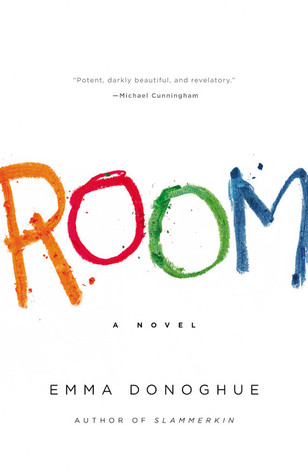
Room
This month's book pick is ROOM by Emma Donughue.

Synopsis (from good reads): To five-year-old Jack, Room is the entire world. It is where he was born and grew up; it's where he lives with his Ma as they learn and read and eat and sleep and play. At night, his Ma shuts him safely in the wardrobe, where he is meant to be asleep when Old Nick visits.

Room is home to Jack, but to Ma, it is the prison where Old Nick has held her captive for seven years. Through determination, ingenuity, and fierce motherly love, Ma has created a life for Jack. But she knows it's not enough...not for her or for him. She devises a bold escape plan, one that relies on her young son's bravery and a lot of luck. What she does not realize is just how unprepared she is for the plan to actually work.

Told entirely in the language of the energetic, pragmatic five-year-old Jack, ROOM is a celebration of resilience and the limitless bond between parent and child, a brilliantly executed novel about what it means to journey from one world to another.

First line:  "Today I am five."

Not the most Earth shattering first line, but it's actually the second one that pulls you in:

"I was four last night going to sleep in Wardrobe, but when I wake up in Bed in the dark I'm changed to five, abracadabra."

The whole opening paragraph gives us the perfect introduction to Jack's unique voice, and we automatically get the sense that something is wrong. Why is a five year old sleeping in a wardrobe?  Why does he talk about objects like their people?  It sucks you right in and makes you want to know what's happening.  

Highlights: Okay, I cheated a bit on this one. Technically ROOM is not YA, but I thought it was such a unique and compelling story that I had to share it.  Plus I think it is the perfect case study for how to develop and commit to a character's voice. 

The whole story is told from five-year-old Jack's perspective, and it's his enthusiasm for the world he lives in and his innocence about what's happening that makes the horrors he experiences bearable. From Jack's perspective, Room is a kind of paradise and Ma and all the objects in it are his friends. But to Ma it's a prison, and Jack has to be braver than he's ever been if he's going to help her escape. 

I have to say that I was worried about reading a story told entirely from the perspective of a five-year-old, but Donughue executes it perfectly and with complete conviction. If Jack's story had been told from Ma's perspective or any other narrator it would have read like one of the other thousands of captive/escape thrillers on the marketplace. But since Jack tells us the story, it feels honest and original.

A good read for: Anyone looking to understand how to write a unique voice, without falling prey to stereotypical behavior. Also great for anyone looking for a book with a unique perspective -- this one is very original.

Wednesday, March 5, 2014

Getting Out of a Writing Slump

Before I get into today's post, I want to say a huge congratulations to fellow Thinking to Inking blogger Lauren, who signed with Kevan Lyon of the Marsal Lyon Literary Agency! If you haven't read her "How I Got My Agent" post, go read it. I'll wait.

I hit a writing slump recently.
Writer's block comic
As anyone who's ever experienced a writing slump (or writer's block) knows, it's not a fun state of affairs. I don't know if everyone does this, but after about a month of not writing a word, I started withdrawing from my writer friends. I didn't check in with them as often as I normally do. I wasn't on Twitter much either, because it just kept reminding me I wasn't writing.

But last week, I met up with a group of writer buddies. We had a six-hour conversation about writing and life and lots of stuff in between.
writer meeting
That was the kick in the pants I needed to jump back into my WIP. Now I'm rolling again!

This points out two things:

1) The importance of having writer friends.
Even if you have other people you talk to about your writing (your best friend, your spouse), it's different to talk to people who are also writers and know what you're going through. This holds true even if they don't write what you write. Writers get other writers.
friends

Meeting up with one, two, or even ten other writers periodically is also a great way to keep yourself accountable. Do you really want to be the one showing up at every meeting and saying you haven't made any progress since last time?

2) Sometimes you just need a little time off.
I've been writing continuously for years, and I have to say--taking the time to focus on other things for a few months wasn't necessarily a bad thing. I'm coming back to my WIP with fresh eyes, and I'm already seeing things to fix that I didn't notice before.

This post from Write it Sideways has another good tip on how to break out of a writing slump: have multiple projects to work on. When you're blocked on one, you can switch over to another. Bonus points if it's in a totally different genre or format (a short story instead of a novel, for example).

Have you experienced the dreaded writer's slump? How did you get out of it?

Monday, March 3, 2014

How I Got My Agent!


Signing my contract and celebrating with chocolate (no surprise).

(Short version)

I went to the SDSU writer’s Conference. Kevan Lyon had reviewed the first ten of Bette Noir and asked for a full when I met with her; two weeks later I got the call, and signed with her right away.

(Ridiculously long and personal version)

I’d always wanted to be a writer, but in the fall of 2010 I decided that it was time for me to actually get serious so I got a roommate to help pay the bills so I could go part-time at work for a year, finished/polished up my first book (YA about a chic secret society of wicked stepmothers and a stepdaughter battling them all to save her dad), and started learning about the publishing industry via obsessive blog reading/comparing notes with the talented Karen Clayton and attending conferences where I picked up friends and an amazingly insightful critique partner/friend in Alison Ashley Formento. I blogged about my experiences here.

I carefully researched agents and sent out queries to what I thought was a lot of agents (maybe 20?) and got half a dozen requests for fulls as well as some nice initial rejection letters. All of the agents sent back nice letters of rejection after reading my work. Many gave me tips on how to make the work better and wrote some nice things about my writing (as a teacher I am deeply touched that they took the time to invest in my writing and give me feedback that I treated like gold), but none was a taker. So I moved on.

My next work, Bette Noir, (YA) tumbled out of me in verse after the most difficult break-up of my dating life (one of the darker periods in my life). I'd become fascinated by the way confronting the darkness we all face has the power to make us strong, and tried my hand at writing my way into figuring out my answer to that philosophical question. On a whim I signed up at last minute for The Big Sur writing conference the night I finished the first draft. When there, I had the honor of working with Brandy Rivers and Sharyn November who gave me the confidence I needed to keep going, and excellent advice on how to shape/make more marketable the work so I re-wrote the ms into verse and prose. I also came to make some amazing writing friends in my thinkingtoinking blogmates. They’ve been beyond wonderful.

After revising Bette Noir, I submitted the ms to five agents (2 full requests with nice rejections), and put it in one contest, and then stopped submitting (not a move supported by many of my friends). I know it sounds cheesy, but while my first ms was a lot of fun to write, this one wasn’t much fun since I was writing a love story through a broken heart. In the midst of my devastation from the break-up, exploring the ways that love and the arts can heal was what got me through, and I didn’t want to send something so personal out unless I was absolutely certain it would be in the right hands (from my experience, all the agents I've researched and met at conferences are great, but I really wanted a great fit with me/my quirks) so I put it in a drawer and moved on to my next work.

One of my very talented best friends/partners in crime is also named Lauren (same height & same hair as well), and our mutual friends are always asking us to write up our shenanigans so I took a break from YA to write a women’s fiction book with her about said shenanigans (so what if the Gin Blossoms are missing one of their five back-up tambourines? They still invited us out on their boat). I finally agreed to write the story with her in a cafĂ© in Soho after 1. She was lamenting the burden of student loans and 2. A creepy man randomly offered me a role as Julianne Moore in a pornography film. Gross. Not the Julianne part, that’s flattering; she’s lovely, but porn??? I told the other Lauren I didn’t love her enough to do porn to help her with her student loans, but that I did love her enough to write a book with her (she is a very talented writer) to try to help pay said loans. We’re currently putting the finishing touches on The Mostly Untrue Adventures of the Laurens Monahan and Avenius.


THE Kevan Lyon--
As smart & good as she is beautiful.
And then the SDSU Writer’s Conference rolled around. It was local. I figured I’d get to hear some good speakers, and steeled myself to send in Bette Noir to Kevan Lyon because she seemed like such a sharp thinker/good person. Based on her reputation online she seemed like she cared about women and that she would be someone I could trust and whose vision was sound. During the consultation she asked for me to send her my full ms. As we kept chatting, we figured out that I had taught her daughter years ago. I can’t tell you how much I loved teaching her daughter. I knew right then that anyone who could raise a young woman like that was exactly the one I wanted guiding my career, and I hoped and prayed like crazy that she’d want to take me on. Two weeks later, on Valentine’s Day, she emailed me telling me that she loved the book that came out of both my heartbreak and hope. I signed with The Marsal Lyon Literary Agency the following Monday.

Picture I took at the beach on Valentine's Day after the call.
Reminds me that as much as life can disappoint,
it can also surprise you in the most beautiful ways.
And now...head down...back to work...the journey is long and I'm sure will be full of many more ups and definitely plenty of downs, too.

If you want to follow that little personal journey, please "like" my brand new author page on Facebook.

Much Love & Chocolate
XOXO
--Lauren


Wednesday, February 26, 2014

Do Self Published Authors Make More Money Than Traditionally Published Authors?

The conversation about author's wages continues to sizzle. Last month, I posted about average author salaries after one Big 5 published author posted her annual earnings. This month, I wanted to share another interesting blog post centered on self-published incomes vs. traditionally published incomes.

In this post on authorearnings.com, Hugh Howey takes a hard look at ebook data to assess who earns more -- shelf published authors or traditionally published authors?

The analysis looks at the top 7,000 genre fiction ebooks sold on Amazon.com, breaking out author incomes based on whether the book was self published, published by the Big 5, by Amazon, by a mid-to- small-sized pub house or by an uncategorized source.  The results are quite intriguing, and make a strong case in favor of self-published authors' earning potential.

Go ahead and take a look.  I'll wait.

Interesting, right?

Now before we all jump ship in favor of self-publishing, I wanted to point out a few things.  I'm a big believer in using data as an unbiased source of information. But you have to be careful when analyzing partial data because it can very easily be skewed. And in the case of the publishing industry, where only a portion of the information is ever available, the data is always inherently flawed.

For example, this assessment only takes ebook sales into account.  To me, this biases the results in the favor of non-Big 5 publishing houses.  If you included print books in the mix, you'd likely see a bigger swing in favor of the Big 5 because of their print distribution networks. In fact, distribution networks are often the catalyst for successful self-pubbed authors deciding to partner with a Big 5 house - they can offer access to mass retailers that you simply can't get on your own.  And while ebook growth can't be denied, print is still the dominant form, so you can't look at ebooks in absence of print and assume it represents the whole picture. At least not yet.

Total size of market also has an impact on the number, as does proliferation.  For example, the data suggests that authors publishing with small-to-mid-sized houses make less than indie and Big 5 pubbed authors.  But this could be driven by the fact that they represent a significantly smaller portion of total books on the marketplace - if a house is only publishing 5-10 books a year, they're going to make up a smaller portion of the earning pie, regardless.

Similarly authors who publish multiple books a year will naturally have greater earning potential. And as the article points out, traditionally published authors are typically limited to one book per year (at best) where indie published authors don't have the same process or contract restrictions and can publish with more frequency.  More books = more money.

So does this mean I don't agree with the article?  No, not at all.  It raises some interesting points, and I think makes a very favorable case for publishing overall:  we might not all become millionaires, but there's money to be made regardless of which path you choose.

The one undeniable fact, no matter how you split the data, is that a self-pubbed author makes a larger percentage of every book sold. For ebooks, that number is ~70%, where a traditionally pubbed author takes home ~30% per book.  That means self pubbed authors have lower volume hurdles - they need to sell half as many books as traditionally pubbed authors to make the same income, assuming flat pricing.

The other thing that all of us need to remember - regardless how we decide to publish - is that publishing a book alone does not guarantee success.  Hugh Howey's article only focuses on the top 7,000 ebooks - but there are millions published each year through various avenues.  And as I pointed out in my previous post, most traditionally published authors won't earn past their advances, and most self-pubbed authors won't break through the already cluttered marketplace to sell a large number of books.

I don't say this to depress you, but simply to paint a realistic picture of what you can expect to earn as an author.  And at the end of the day your path to publication is yours and yours alone. It shouldn't matter which path will make you more money, but whether or not your decision is the one that makes you feel like you've realized your publishing dreams.


Monday, February 24, 2014

Industry Review: Trains, Planes & Books!


Amtrak Train


This has got to be the highest trending topic for writers this week (besides the Olympics - congratulations Team Canada & Team U.S.A!). Amtrak's Writer's Residencies Program has got everyone uber excited. I bet there's not a writer out there who's not sitting at their desk daydreaming about a getaway to write while traversing the American countryside - for FREE! Well…the first two were anyway.  But the cool thing is, this all started on social media and with enough support, this could become a regular program (Canada Via Rail - hear that? *hint* *hint*). 


If you had a chance to book a train or flight to catch SCBWI's New York Conference this weekend, you were in for a treat! From sold out intensives like "For Writers: Plot and Structure in Fiction" moderated by veteran editor and publisher Emma Dryden to thought provoking keynote speeches by poet and best selling author Nikki Grimes and best selling author Kate Messner, this year's New York Conference was not one to miss. BUT, if you did, fear not. You can catch all the highlights on the official SCBWI conference blog.  

Fall may be quite some time away, but if you're planning a trip and you're looking for reading material, there are some great novels headed your way.  Publishers Weekly just released it's Fall 2014 Children's Sneak Previews.  Special shout out to author/friend Martina Boone who's Beholden will be published by S&S/Pulse. 

Now finally, everyone can enjoy a little downtime from all the activities these past few weeks and bask in their new found SCBWI knowledge and Olympic glow (hopefully aboard a scenic train ride across some great states ;)).